By Poppa Ben | PoppaBen.com
Over the years, many women have asked me what to do about yeast infections. Some are dealing with vaginal symptoms, others with soreness while nursing, and some are worried about white patches in their baby’s mouth. I’m writing this to answer those questions in one place.
When you’re dealing with itching, burning, or irritation, you want relief. And if you prefer natural health approaches, you may wonder whether changing your diet, taking probiotics, or using a home remedy can help.
There are sensible ways to care for yourself. But there is an important distinction: easing irritation is different from clearing an infection. Natural care can support comfort, while an active yeast infection usually needs an antifungal treatment.
First, make sure it really is yeast
Candida is a yeast that can live in the body without causing trouble. An infection develops when it grows excessively in a particular area.
Vaginal symptoms may include intense itching, soreness, burning, and thick white discharge. But these symptoms can overlap with bacterial vaginosis, sexually transmitted infections, and irritation. Treating everything as yeast can leave the actual problem untreated. A clinician can examine the area and test a sample when needed. 1
Gentle care that can help
Sometimes the most useful natural steps are simple ones.
Wash gently. Clean the outside genital area with water; avoid fragranced soaps, deodorants, and harsh cleansers. The vagina does not need internal cleaning. Douching can disturb its normal environment. 1, 2
Reduce trapped moisture. Change out of damp exercise clothes or swimwear promptly. Choose breathable underwear with a cotton crotch, and avoid clothing that stays tight and sweaty against the skin. 1
Dry carefully. Pat the area dry rather than rubbing irritated skin. Avoid sex if it is painful while symptoms settle. These measures can reduce discomfort, but they do not replace treatment for an infection. 2
You do not need to scrub harder or buy a cupboard full of “cleansing” products. More washing can mean more irritation.
Organic coconut oil for external comfort
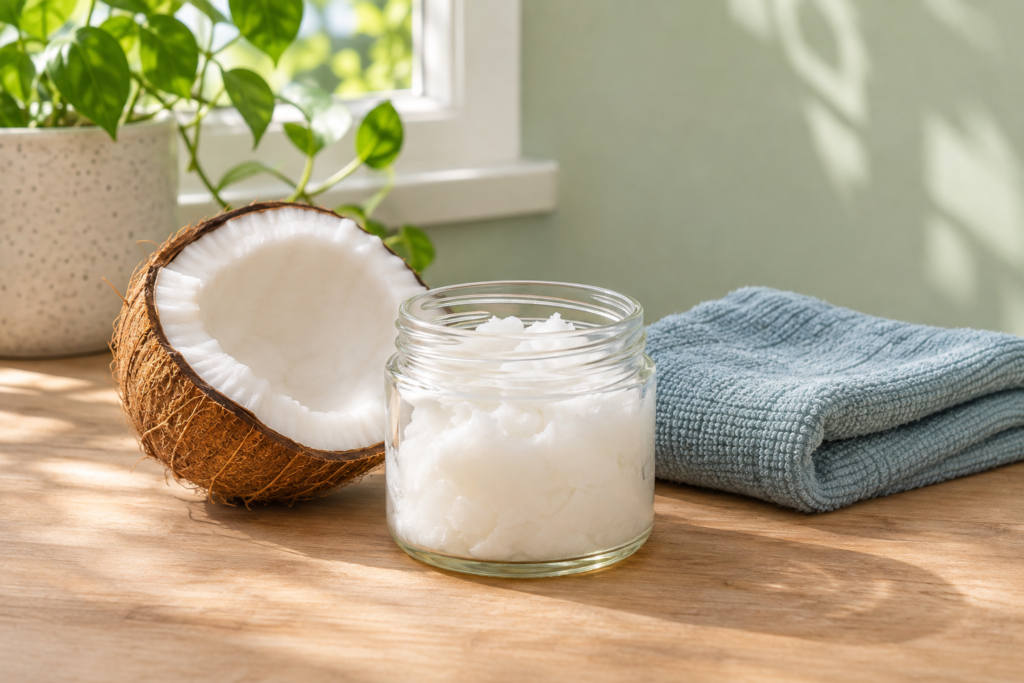
In my practice, some women have told me that plain, unscented organic coconut oil feels soothing on dry, irritated external skin. If you try it, use a small amount on the outside skin only. Stop if it stings or worsens the irritation, and avoid it if you have a coconut allergy. Oils can weaken latex condoms and diaphragms. 7
One laboratory study found that coconut oil inhibited some Candida samples. The study tested yeast in the lab. We still lack good evidence that applying coconut oil clears an infection in people. 8
Can probiotics or yogurt help?
It makes sense to ask about beneficial bacteria. Researchers have studied probiotics for vaginal health, but the results do not establish them as a dependable cure for yeast infections.
The CDC states that there is no substantial evidence supporting probiotics or homeopathic medicines for treating vaginal candidiasis. Whether probiotics help prevent recurrence is less certain, and effects may depend on the specific product and strain. 1, 3
Plain yogurt with live cultures can be part of your meals if you tolerate it. However, eating yogurt is different from treating an infection. Do not rely on a probiotic supplement to clear persistent symptoms.
My experience after antibiotics: In my practice, I often find that people seem to benefit from the right probiotic after a course of antibiotics. I pay attention to the individual and the particular product rather than assuming every probiotic will have the same effect. This is my personal observation, not proof that a probiotic is necessary for everyone or that it cures yeast infections. Antibiotics can increase the risk of yeast infections, but persistent symptoms still need an accurate diagnosis and appropriate treatment. 3, 6
What about sugar and a “Candida diet”?
You may have heard that you need to starve yeast by eliminating sugar, fruit, bread, dairy, and fermented foods.
Mayo Clinic notes that clinical trials have not shown that a Candida cleanse diet treats a known medical condition. Someone may feel better after replacing highly processed foods with nourishing meals, but that improvement does not prove that yeast was the cause of their symptoms. 4
A practical approach is to eat balanced meals: vegetables, adequate protein, fiber-rich foods you tolerate, and fewer sugary drinks and heavily processed snacks. There is no need to assume that every piece of fruit or slice of bread is feeding an infection.
Blood sugar deserves separate attention. Poorly controlled diabetes can increase the risk of yeast infections. If infections recur, discussing blood sugar with your healthcare professional may be worthwhile. This does not mean that everyone with a yeast infection has diabetes. 1
Be careful with home remedies
Online suggestions include inserting garlic or yogurt, using vinegar rinses, or applying tea tree and other essential oils.
These approaches are not established treatments. Inserting household substances or applying concentrated oils to sensitive tissue can cause irritation or allergic reactions. Avoid homemade vaginal treatments, including essential oils, even when a product is described as natural. Laboratory antifungal activity does not establish that a substance safely cures an infection in a person. 5
Thrush in your baby’s mouth

Oral thrush can look like creamy white patches on the inside of the cheeks, gums, roof of the mouth, or tongue. Milk residue often wipes away gently, while thrush patches tend to stick. Some babies are fussy during feeds, and a persistent diaper rash can occur at the same time. 9, 10
Call your pediatrician if you suspect thrush. They can check the patches and recommend an antifungal appropriate for your baby’s age if needed. Call promptly if your baby is drinking less than usual. Check with the pediatrician before putting coconut oil or any other home remedy in your baby’s mouth. 9, 13
Wash your hands before preparing feeds and after diaper changes. Clean bottles, nipples, and pacifiers regularly, and wash pump parts that touch milk after each use. Ask your pediatrician whether extra sanitizing is needed for your baby. 9, 12
Sore nipples or breast pain while breastfeeding
If nursing starts to hurt, ask a clinician or lactation consultant to watch a feed. A shallow latch, an ill-fitting pump flange, or too much pump suction can make nipples sore. Burning pain, shiny or flaky skin, and pain deeper in the breast can have several causes. Even when your baby has oral thrush, it’s worth checking what’s causing your pain before starting an antifungal. 10, 11
If your baby has thrush and you have symptoms too, ask your pediatrician and your own clinician whether both of you need treatment. Guidance differs on treating both automatically, and newer evidence suggests that passing the infection back and forth may be less common than previously thought. If you want to try coconut oil on sore nipples, check with your clinician first, since your baby will come into contact with it during feeding. 10, 11
Yeast can also contribute to an itchy rash in the skin fold under the breasts. Gently dry the fold after washing, change out of damp clothing, and have the rash checked if it persists. 2
When antifungal treatment makes sense
Using effective medicine can fit into a thoughtful approach to health. Antifungals such as clotrimazole or miconazole are established treatments. A pharmacist or clinician can help choose an appropriate option. 3
Pregnancy requires particular care: CDC guidance recommends seven days of topical azole treatment for vaginal yeast infections during pregnancy and advises against oral fluconazole. Speak with your maternity clinician before treating yourself. 3
If it keeps coming back
Repeated infections deserve testing rather than repeated guessing. Three or more symptomatic vaginal yeast infections within a year meet the CDC definition of recurrent infection. Different yeast species or resistance can require a different treatment plan. Symptoms that persist after over-the-counter treatment, or return within two months, should be assessed. 3
Seek care for a first episode, uncertain symptoms, pregnancy, or a weakened immune system. Fever or pelvic pain warrants prompt medical assessment rather than assuming yeast is responsible. 2, 6
What about men and skin infections?
Yeast can also cause irritation around the private parts or a rash in moist skin folds. Gentle washing and careful drying may help, but a persistent rash needs assessment and may require an antifungal. Not every itchy rash is yeast. 2
My approach is to keep natural care practical: protect irritated tissue, avoid unnecessary products, and give your body nourishing food. When an infection is present, getting the right diagnosis and treatment is part of taking good care of yourself.
In general, if the body is healthy and well balanced, people don’t usually develop yeast infections. If you have major elements of stress in your life, consider methods of de-stressing, like taking time out to go into the forest to be with nature. See my article on this here. Also make sure that you are eating a nutritious diet with ample protein. See my article here.
Disclaimer:
This article is for general education and does not diagnose or treat illness. Natural comfort measures and supplements are not substitutes for appropriate medical care.
Sources
1. Office on Women’s Health: Vaginal yeast infections
2. NHS: Thrush in men and women
3. CDC: Vulvovaginal candidiasis treatment guidance
4. Mayo Clinic: Candida cleanse diet: What does it treat?
5. InformedHealth.org / IQWiG: Vaginal yeast infections: What can help?
6. MedlinePlus: Vaginal yeast infection
7. Cleveland Clinic: What can I use instead of lube?
8. Ogbolu et al. (2007): Laboratory study of coconut oil and Candida
9. NHS: Oral thrush
10. NHS: Thrush and breastfeeding
11. UNICEF UK Baby Friendly Initiative: Information sheet on Candida (thrush)
12. CDC: How to clean and sanitize breast pumps
13. American Academy of Pediatrics: Thrush symptom checker

Ben — known to his clients and readers as Poppa Ben — is a certified practitioner of Natural Bioenergetics (formerly Health Kinesiology) with decades of hands-on experience helping people restore their energy and vitality. He writes about natural health, nutrition, herbs, energy work, and the occasional skin-healthy recipe. His approach always comes with the same reminder: your body wants to be in balance, and sometimes it just needs someone to listen.