By Poppa Ben | PoppaBen.com
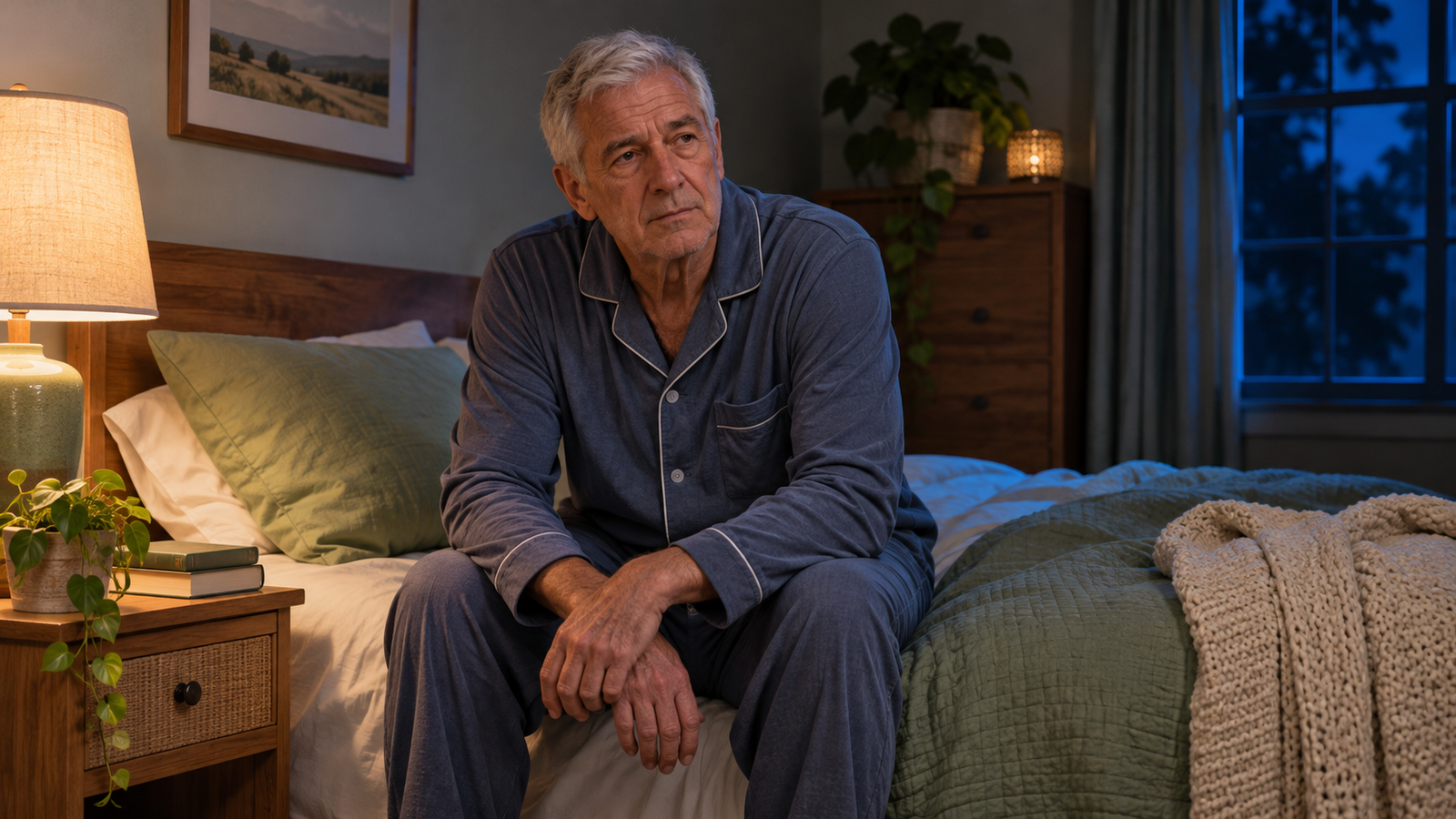
It’s three in the morning, and you’re up for the second time to use the bathroom. By breakfast you feel as though you barely slept. When it happens night after night, it’s natural to wonder whether your prostate is to blame and whether this is just part of getting older.
I went looking for a country or community where men rarely have these troubles. I found no reliable evidence of a population entirely free of prostate enlargement or nighttime urination. I did find a study of men in the Bolivian Amazon that made me rethink how much the prostate typically grows with age.
What happens when the prostate enlarges?
The prostate sits just below the bladder and wraps around the tube that carries urine out. It tends to grow as men age. That noncancerous growth is called benign prostatic hyperplasia, or BPH.
As the prostate grows, it can narrow the passage for urine. You may notice a weak stream, trouble getting started, dribbling, or the feeling that your bladder still has urine in it when you’re done. You might also feel a sudden urge to go or make more trips to the bathroom.
Some men have a fairly large prostate and hardly notice it. Others have bothersome symptoms with only slight enlargement. BPH and prostate cancer are separate conditions and can coexist, so changes in urination are worth discussing with a clinician. [1, 2]
What Weston Price noticed about traditional diets
In the 1930s, dentist Weston A. Price traveled to communities around the world, including Inuit communities, Swiss villages and communities in the Andes. In his 1939 book, Nutrition and Physical Degeneration, he described remarkably little tooth decay and well-developed dental arches in many groups eating their traditional foods. He reported more decay and dental crowding in groups whose diets had shifted toward foods such as refined flour and sugar.
Price also recorded accounts from local doctors who rarely encountered certain illnesses in some communities. Those were observations from their own practices, and Price’s work focused mainly on teeth and facial development. I found no prostate examinations or records of nighttime urination in the available text of his book. His work raises a question about how diet and daily life shape health as we age. The prostate question needed a study of its own. [3]
What researchers found in the Bolivian Amazon
In 2015, researchers reported using ultrasound to measure the prostates of 348 Tsimane men. The Tsimane are an Indigenous people whose traditional way of life includes hunting, fishing, gathering and small-scale farming.
After accounting for age, the researchers estimated that about 28% of Tsimane men ages 40 to 80 met their study definition of enlargement, compared with about 61% in the U.S. data they used. The Tsimane estimate came from ultrasound measurements using a cutoff of more than 20 cubic centimeters. The U.S. estimate came from earlier studies that examined prostate tissue for BPH. Those different methods make the percentages an approximate comparison. The study also compared actual prostate measurements across several populations and found that the Tsimane men generally had smaller prostates. [4]
How often did those men get up at night? The measurements leave that question open. They also leave open how common prostate cancer and other prostate conditions were in the community. And the study couldn’t tell us how much of the difference in prostate size came from diet, physical activity, hormones or other factors. Among the Tsimane men, a higher marker of average blood sugar was associated with enlargement. Whether improving blood sugar would prevent enlargement remains an open question. [4]
What can you do in everyday life?
A regular walk, meals with plenty of vegetables, and attention to blood sugar are good places to start for general health. Being physically active is also one of the lifestyle measures recommended for men managing mild BPH symptoms. Research has yet to establish a particular food or diet that prevents BPH. [1]
If broken sleep is what brought you here, I’d start by paying attention to what happens before and during those nighttime trips.
Waking up to urinate can have several causes
Doctors call it nocturia. An enlarged prostate can play a part, especially if you also have a weak stream or trouble emptying your bladder. Sometimes the bladder is overactive or the body makes more urine overnight. Diabetes, sleep apnea, heart or kidney conditions, and medicines such as water pills can also contribute. A sleep problem can wake you first, and only then do you notice the urge to go. [5]
- Move more of your fluids earlier in the day. Stay hydrated and try drinking less close to bedtime. See whether cutting back on late caffeine or evening alcohol helps. Follow any fluid guidance your clinician has given you. [1, 5]
- Give yourself time to empty your bladder. If it still feels full, pause briefly and try again without straining. Tell your clinician if that sensation keeps happening. [1, 5]
- Keep a bladder diary for three days. Write down when and how much you drink, when and how much you urinate, and when you go to bed and wake up. Small amounts on repeated trips tell a different story from passing a lot of urine each time. Bring the diary to your appointment. [5]

- Mention snoring and review your medicines. Loud snoring, waking up gasping, or feeling unusually sleepy during the day are reasons to ask about sleep apnea. A clinician or pharmacist can also review your water pills and any cold or allergy medicines you take, including whether a change in timing makes sense. [1, 5]
What about prostate supplements?
Saw palmetto is probably the first thing you’ll see in the supplement aisle. According to the National Center for Complementary and Integrative Health, a review of 27 studies found that saw palmetto taken on its own offered little or no benefit for BPH symptoms. Evidence on products that combine it with other ingredients is less clear. If you’re thinking about a prostate supplement, bring the label to your clinician or pharmacist so they can review the ingredients alongside your medicines. [6]
When to get checked
Make an appointment if your symptoms are new, getting worse, or regularly disturbing your sleep. If BPH is the cause, your options may include monitoring mild symptoms, medicines that improve urine flow or shrink the prostate, or a procedure. The best choice depends on how much the symptoms bother you, how well you empty your bladder, and your overall health. [1, 2]

Get medical help right away if you can’t urinate at all, see blood in your urine, have severe lower abdominal or urinary tract pain, or have painful, urgent or frequent urination along with fever and chills. [1]
If you’re getting up several times a night, bring a few days of notes to your doctor. The timing, the amount of urine, and how well you empty your bladder during the day can help you figure out what’s interrupting your sleep and what might give you relief. Of course, it also helps to make sure that you are exercising enough. A good walk should take care of that. Se my article on walking here.
This article is for general education. Talk with a qualified healthcare professional about persistent urinary symptoms and before starting a supplement for them.
Sources
- National Institute of Diabetes and Digestive and Kidney Diseases — Enlarged Prostate (Benign Prostatic Hyperplasia)
- National Cancer Institute — Understanding Prostate Changes and Conditions
- Weston A. Price — Nutrition and Physical Degeneration (1939)
- Trumble and colleagues — Low Levels of Benign Prostatic Hyperplasia Among Tsimane Forager-Horticulturalists (2015)
- European Association of Urology — Management of Male Lower Urinary Tract Symptoms
- National Center for Complementary and Integrative Health — Saw Palmetto

Ben — known to his clients and readers as Poppa Ben — is a certified practitioner of Natural Bioenergetics (formerly Health Kinesiology) with decades of hands-on experience helping people restore their energy and vitality. He writes about natural health, nutrition, herbs, energy work, and the occasional skin-healthy recipe. His approach always comes with the same reminder: your body wants to be in balance, and sometimes it just needs someone to listen.