By Poppa Ben | PoppaBen.com
Have you ever noticed how a familiar scent can change the way you feel? Fresh lemon, a garden after the rain, or a sprig of lavender can make you pause and take a breath.
That is part of what draws people to essential oils. Some use them to unwind after a long day, and others make them part of their bedtime routine. For me, the interest is also personal: I saw a real difference in my son’s mood swings when we used essential oils.
Let’s look at where essential oils may help, what the research actually supports, and how to choose and use them carefully.
What Are Essential Oils?
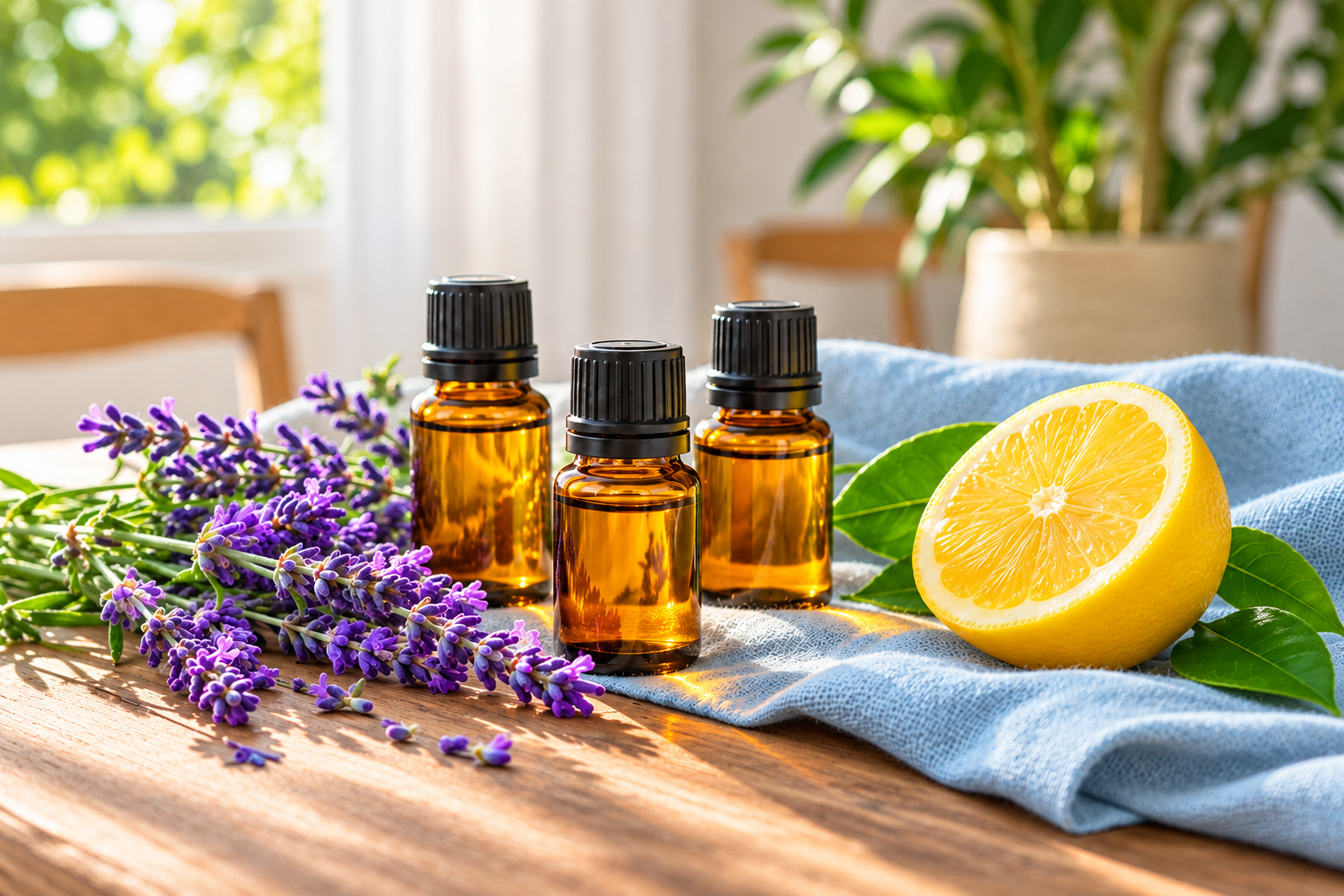
Essential oils are concentrated aromatic extracts from plants such as lavender, lemon, and peppermint. Using them for their scent is called aromatherapy. They can also be used in properly diluted skin products.
Because they are so concentrated, a bottle of essential oil deserves more care than a bunch of fresh herbs. The National Center for Complementary and Integrative Health (NCCIH) describes aromatherapy as a complementary health approach. That is a useful way to think about it: something that may support comfort alongside appropriate care.
1. Helping You Unwind and Lifting Your Mood

One of the main reasons people reach for essential oils is simple: they want to feel less wound up.
Lavender is a familiar choice. Many people find its scent soothing, especially during a quiet break or at the end of a busy day. Others dislike it, and a scent that relaxes one person may bother another.
Research on lavender for anxiety is mixed. NCCIH says it remains unclear how much lavender aromatherapy helps with anxiety or stress. Some of the more promising studies used a specially formulated oral lavender product, which is not the same as smelling an oil, and it does not mean an aromatherapy bottle is safe to swallow.
Brighter scents can help too. Think of the smell of a freshly peeled lemon. NCCIH describes a study in which lemon scent improved people’s reported mood during a stressful situation, although it did not change their immune markers or pain levels. One study is not proof, but it points to something many of us already sense: a pleasant scent can change how a moment feels.
My practical view is to pay attention to how you feel. If a scent makes a quiet moment more relaxing or a hard day a little brighter, that is worthwhile in itself, even though it is not a treatment for anxiety or depression.
2. Supporting a Bedtime Routine
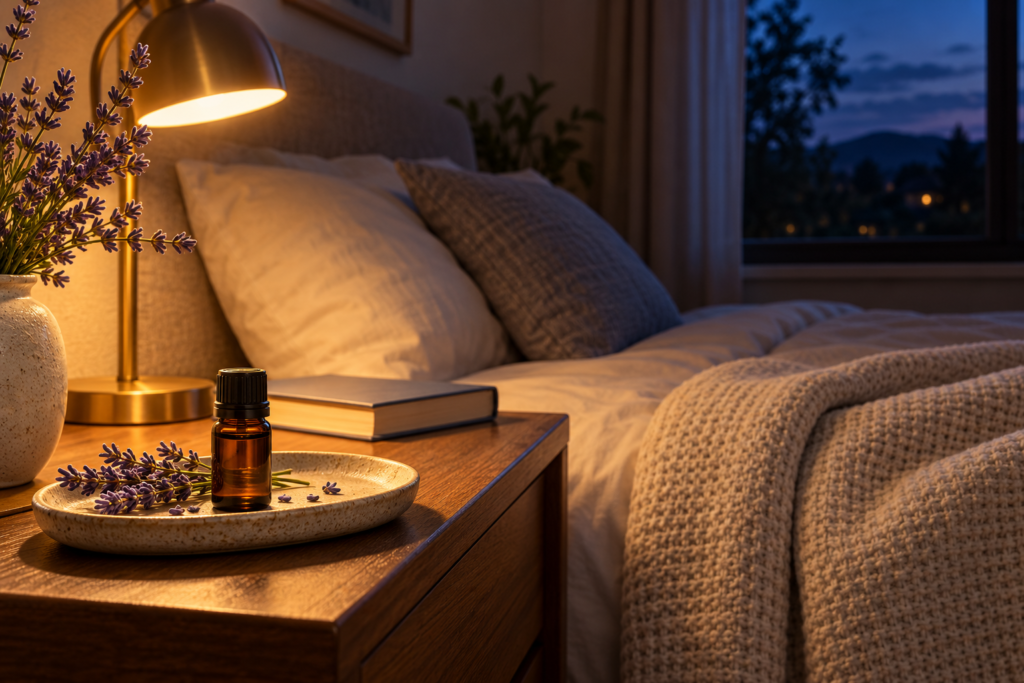
You finally get into bed, but your mind is still running through the day. Sound familiar?
A pleasant scent can be one part of slowing down: dim the lights, put away the screen, and give yourself some quiet time.
NCCIH describes a review of 16 studies suggesting that aromatherapy may improve sleep quality, while noting that larger and more rigorous studies are needed. That makes it a promising possibility rather than an established insomnia treatment.
If you enjoy a scent, try a short session of aromatherapy as part of your wind-down routine, following the product directions. There is no need to run a diffuser all night. And if sleep trouble keeps going, it deserves attention to the underlying cause.
A Personal Experience With My Son
One reason this subject matters to me is my son’s experience with Lyme disease.
Even while on medication, he went through pronounced mood swings: real ups and downs that were hard on him and on us. We suspected Lyme and its coinfections were playing a part.
When we started using essential oils, I noticed his mood swings became noticeably less intense. It wasn’t a cure, and I can’t prove the oils were the reason, since he was receiving other treatment too. But as his father, I saw a real difference, and it mattered to our family.
If you or someone you love is dealing with ongoing symptoms after Lyme treatment, or with significant mood changes, please work with a healthcare provider. Oils can be a comfort alongside that care, not a replacement for it.
If you’d like to talk about what we used and how, you’re welcome to reach out to me through my contact page for a personal consultation.
Choosing Quality Oils: doTERRA and Young Living
When it comes to essential oils, I care about what is in the bottle. In my opinion, doTERRA and Young Living are among the best-quality brands available.
Both companies run their own sourcing and testing programs: doTERRA has its CPTG process, and Young Living has its Seed to Seal standards. These are the companies’ own quality programs, so they show attention to purity rather than proof that the oils work better medically.
Whichever brand you choose, look for clear ingredient information, the plant’s botanical name, safety directions, and accessible testing information. A higher price alone does not guarantee quality, and a pure oil still is not safe for every use.
My doTERRA Recommendation
Affiliate disclosure: I have a financial relationship with doTERRA and may earn a commission if you purchase through my link.
[Browse doTERRA essential oils through my referral link.]
If you’re curious about essential oils, doTERRA is a brand I recommend considering. Start with one simple oil that suits your needs and budget. You’ll find out quickly whether aromatherapy is something you enjoy.
How to Try Essential Oils Sensibly
- Choose a scent you actually enjoy. Popular doesn’t mean right for you.
- Start with one product. Follow its directions, use a light scent briefly in a ventilated room, and see how you respond.
- Respect everyone sharing the room. Stop if the scent causes coughing, wheezing, headache, nausea, or discomfort.
- For skin use, choose a properly diluted product made for that purpose. Test a small area first, and never apply concentrated oil directly to your skin.
- Notice practical changes. Did you feel more relaxed? Was bedtime easier? A small benefit is still a benefit.
Natural Still Needs Care
Essential oils can irritate the skin, trigger allergies, and cause poisoning if swallowed. Keep them away from your eyes and store them securely out of children’s reach. Don’t add aromatherapy oils to drinking water or take them by mouth. A specially formulated oral product studied in research is a different matter and should be discussed with a clinician.
Some citrus oils can make skin more sensitive to sunlight, so check the product’s precautions before using it on your skin.
Ask a healthcare professional before using oils if you are pregnant or breastfeeding, if they’re for a child, or if you have asthma or seizures or take medications. Lavender may add to the effects of sedating medicines. If you have pets, ask your veterinarian before diffusing oils around them.
For more, the Nationwide Children’s Hospital safety guide offers practical precautions, and Poison Control explains the risks of lavender oil, including swallowing it or using it undiluted.
Sometimes, a person also needs the right amount of minerals to feel balanced. See my articles on calcium an magnesium about this.
My Take
I believe essential oils deserve a sensible place in everyday well-being. Many people enjoy them for relaxation, a bedtime routine, or a little emotional comfort, while others find scents unpleasant and do better without them.
For my family, they made a real difference during a hard time with my son. Start gently, use them safely, and keep good medical care in place.
This article is for education and shares personal observations. It is not medical advice. Essential oils are not established treatments for Lyme disease, coinfections, bipolar disorder, or other serious medical conditions. Do not stop or change prescribed medication on your own.

Ben — known to his clients and readers as Poppa Ben — is a certified practitioner of Natural Bioenergetics (formerly Health Kinesiology) with decades of hands-on experience helping people restore their energy and vitality. He writes about natural health, nutrition, herbs, energy work, and the occasional skin-healthy recipe. His approach always comes with the same reminder: your body wants to be in balance, and sometimes it just needs someone to listen.