
When we think about exercise, we often picture a gym, weights, running, or a complicated workout program. But one of the simplest forms of physical activity may also be one of the most valuable: walking.
Walking doesn’t require expensive equipment, a gym membership, or years of training. You can do it almost anywhere and adjust the pace and distance to your own ability. Whether it’s a leisurely stroll around the neighborhood or a brisk walk that gets your heart pumping, regular walking can be an important part of a healthy lifestyle.
Our Bodies Were Designed to Move
Modern life makes it easy to spend hours sitting at a desk, in the car, on the couch, or in front of a screen. Walking is one of the simplest ways to break up that inactivity.
Even short walks get your muscles working and add movement to your day. You don’t have to walk for hours to get started. If you’ve been sitting for a long time, even getting up and taking a short walk is a positive change.
One thing I’ve learned over many years of being interested in natural health is not to overlook the basics. We can spend a lot of time looking for complicated ways to improve our health while forgetting something as simple as getting up and moving. Walking is one of those basic habits that almost anyone can begin at their own level.
Walking Supports Heart Health
Brisk walking is a form of aerobic activity. When your pace raises your heart rate, your heart and lungs work harder to deliver oxygen to your muscles.

Regular physical activity is associated with significant cardiovascular and metabolic health benefits. The World Health Organization recommends that adults get 150–300 minutes of moderate-intensity aerobic activity per week, or 75–150 minutes of vigorous activity, or an equivalent combination. Walking can be one way of accumulating that activity.
Don’t let those numbers discourage you if you’re currently inactive. Some activity is better than none. Start with what you can comfortably manage and gradually build from there.
Walking Can Support Healthy Blood Sugar
When you walk, your working muscles use glucose for energy. Regular physical activity is associated with better metabolic health and a reduced risk of developing type 2 diabetes.
There is also research specifically looking at walking after eating. A systematic review and meta-analysis published in Sports Medicine found that exercise after a meal reduced post-meal glucose excursions compared with remaining inactive, and appeared more effective when performed soon after eating rather than before the meal. The researchers also noted limitations in the available studies, so this shouldn’t be interpreted as a prescription that everyone needs to walk immediately after every meal.
Still, taking a short walk after a meal can be a simple way to add more movement to your day.
Walking isn’t a substitute for medical treatment if you have diabetes or another health condition. But movement can be an important part of an overall healthy lifestyle.
Walking Can Help With Weight Management
Walking requires energy, and the amount you use depends on factors such as your body size, pace, distance, and terrain.
It isn’t a magic weight-loss solution. Nutrition, sleep, genetics, overall activity, and many other factors influence body weight.
But walking has an important advantage: it’s practical.
You don’t have to drive to a gym or learn a complicated routine. For many people, that makes walking easier to continue consistently—and consistency is one of the most important parts of developing a healthy habit.
Walking Helps You Stay Mobile
As we get older, maintaining the ability to move comfortably becomes increasingly important.
Walking uses the muscles of the legs and hips and helps us continue doing the movements required in everyday life—walking through a store, getting around the house, going up stairs, and simply getting from place to place.
Walking isn’t a replacement for strength or balance exercises, especially as we age, but it can provide an excellent foundation for an active life.
Walking Is Good for Your Mind, Too
The benefits of physical activity aren’t limited to the body. The World Health Organization reports that regular physical activity is associated with benefits for mental health, cognitive health, sleep, and overall well-being.
Many people also discover something much simpler for themselves: a good walk can help clear the head.
Getting away from your desk, phone, or normal surroundings for a while can give you time to think, reflect, talk with someone, or simply enjoy some quiet.
Sometimes when your mind feels overloaded, going for a walk may be just the change of pace you need.
You Don’t Need to Walk Fast Every Time
Not every walk needs to become a workout.
A brisk walk has its place, but so does a relaxed stroll where you can enjoy your surroundings or have a conversation with someone.
The best walking routine isn’t necessarily the most impressive one.
It’s the one you’ll actually continue doing.
How to Get Started
There’s no single perfect amount of walking for everyone. Your starting point depends on your age, fitness, health, schedule, and goals.
If you’re currently inactive, keep it simple:
- Take a 10-minute walk once or twice a day.
- Walk around the block after a meal.
- Take the stairs when practical.
- Park a little farther from your destination.
- Take short walking breaks during the day.
- Add a few minutes as your endurance improves.
Small amounts of movement can eventually become a regular part of your day.
Make Walking Part of Your Routine
One of the easiest ways to establish a walking habit is to connect it with something you already do.
Walk after breakfast. Take a walk after dinner. Walk during your lunch break. Pick a particular morning when you know you’ll have some time.
Walking with your spouse, a friend, your children, or a neighbor can turn physical activity into social time. You may find yourself walking farther simply because you’re enjoying the conversation.
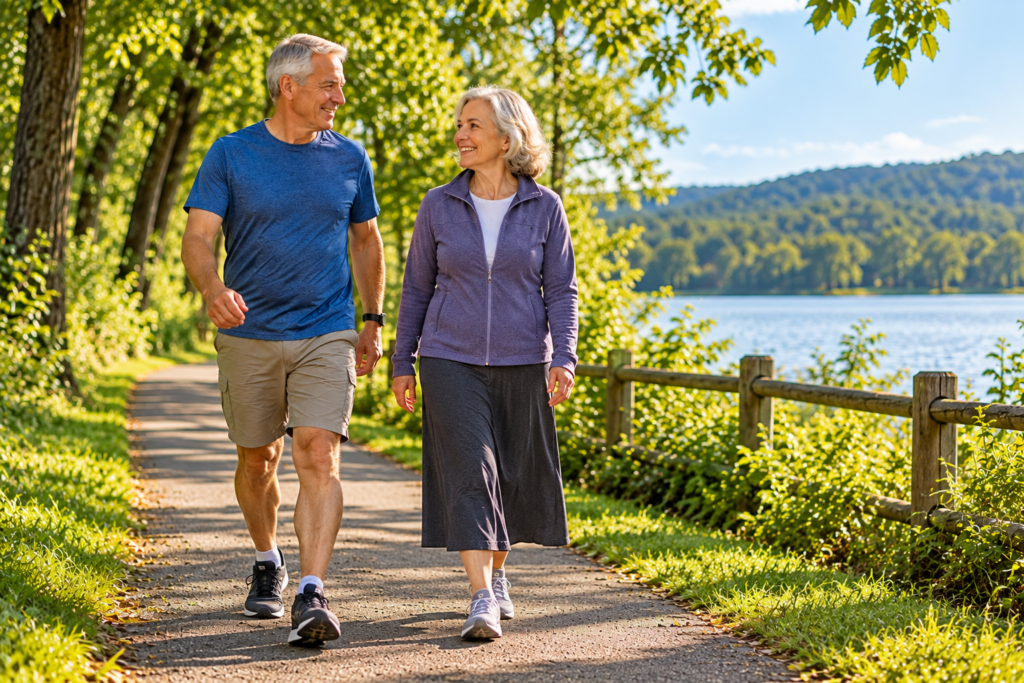
And if you prefer walking alone, that can be valuable too. It gives you some quiet time away from the normal busyness of the day.
The goal isn’t perfection.
It’s consistency.
Don’t Underestimate a Simple Walk
We often look for complicated answers when some of the basics are right in front of us.
Walking is simple, accessible, and free.
You don’t have to become a marathon runner, and there isn’t anything magical about reaching exactly 10,000 steps every day.
The important thing is to find ways to move your body regularly.
So put on a comfortable pair of shoes and take a walk. If ten minutes is what you can comfortably do today, start with ten minutes rather than waiting for the perfect time to begin.
And if you can take that walk somewhere green and peaceful, there may be additional benefits. I explore that in my article on Getting Back to Nature: The Health Benefits of Spending Time Outdoors.
Disclaimer: This article is for general educational purposes and is not intended to diagnose, treat, or prevent any medical condition. If you have a medical condition, significant mobility limitations, or concerns about beginning an exercise program, talk with an appropriate healthcare professional about what is safe for you.

Ben — known to his clients and readers as Poppa Ben — is a certified practitioner of Natural Bioenergetics (formerly Health Kinesiology) with decades of hands-on experience helping people restore their energy and vitality. He writes about natural health, nutrition, herbs, energy work, and the occasional skin-healthy recipe. His approach always comes with the same reminder: your body wants to be in balance, and sometimes it just needs someone to listen.