
By Poppa Ben | PoppaBen.com
How do you say selenium? It’s pronounced seh-LEE-nee-um, with the emphasis on LEE. Listen to the pronunciation.
If you’ve ever read the label on a thyroid supplement or heard that Brazil nuts are good for you, you’ve probably come across selenium. It’s an essential mineral your body needs in tiny amounts. Most people in the United States get enough from everyday foods, yet some supplements contain several times what an adult needs in a whole day. That makes selenium one nutrient worth checking on the label before you buy.
Source — NIH Office of Dietary Supplements
What does selenium do for your body?
● Helps your body use thyroid hormone. Selenium is part of the enzymes that convert T4 into T3, the more active thyroid hormone. This process needs adequate selenium, along with enough iodine to make thyroid hormones in the first place.
● Helps protect cells. Some selenium-containing enzymes, including glutathione peroxidases, help your body manage peroxides that can damage cells. That’s what people mean when they call selenium part of the body’s antioxidant defenses.
● Supports normal immune function. Selenium-containing proteins help the immune system do its everyday work. There isn’t enough evidence that taking extra selenium prevents colds or flu.
● Plays a role in reproduction and DNA production. Selenium is involved in normal sperm development and function, and selenium-dependent proteins help make DNA. Still, a role in sperm health doesn’t show that supplements improve a couple’s chances of having a baby.
Sources — NIH selenium fact sheet, NIH overview of supplements and immune function, and Oregon State University selenium overview
Can a selenium supplement help?
If your selenium intake is too low
Correcting a deficiency can help restore the body’s normal selenium-dependent functions. Deficiency is uncommon in the United States. Some groups are at higher risk of low levels.
● People on long-term kidney dialysis
● People living with HIV
● People whose diets rely heavily on foods grown in low-selenium soil
● People with conditions that interfere with nutrient absorption, such as severe Crohn’s disease
These situations call for an individual assessment before supplementing.
Sources — NIH deficiency information and Oregon State University selenium overview
If you have Hashimoto’s thyroiditis
A 2024 review included people both taking and not taking thyroid hormone replacement. Supplements lowered one type of thyroid antibody, called TPO antibodies, across these groups. A small reduction in thyroid-stimulating hormone, or TSH, was found in people who weren’t taking thyroid hormone replacement. A separate year-long trial, CATALYST, studied people taking levothyroxine. Selenium lowered their antibodies but did no better than placebo on quality of life. If you’re considering selenium for Hashimoto’s, talk with your clinician about what you hope to improve, and keep taking your thyroid medication as prescribed.
If you have mild, active thyroid eye disease from Graves’ disease
A European guideline supports a six-month course for certain patients. The clearest evidence comes from regions where selenium intake is low, so it’s uncertain whether people in selenium-sufficient areas get the same benefit. An eye specialist or endocrinologist can tell you whether this applies to you.
For cancer, heart disease or memory
For years, selenium was promoted as a cancer preventive. Then came the SELECT trial, which followed more than 35,000 men. It found that selenium supplements did not prevent prostate cancer. Large trials also haven’t shown that selenium prevents cardiovascular disease, and the evidence hasn’t established a benefit for preventing cognitive decline. Some trials have raised concern about a possible increase in type 2 diabetes with long-term supplementation, though the findings are mixed.
Sources — 2024 review of randomized trials, CATALYST clinical trial, European Group on Graves’ Orbitopathy guideline, NIH review of the evidence, and National Cancer Institute evidence review
How much selenium do you need?
|Life stage |U.S. recommended daily intake|
|————-|—————————–|
|Adults |55 micrograms (mcg) |
|Pregnancy |60 mcg |
|Breastfeeding|70 mcg |
The U.S. upper limit for adults is 400 mcg per day from food and supplements combined. The European Food Safety Authority uses 255 mcg per day for adults. These are safety ceilings for regular intake. Your daily target is the much smaller amount in the table. Children have their own age-based limits. When reading a label, remember that 1 mg equals 1,000 mcg.
Sources — NIH intake and upper limits and European Food Safety Authority assessment
Which foods provide selenium?
Fish, chicken, meat, eggs and dairy are common sources. Bread, cereals and other grains can contribute too, although the amount in plant foods varies with the soil they were grown in. A large hard-boiled egg provides about 15 mcg, and 3 ounces of roasted light-meat chicken provide about 22 mcg. Those two servings alone add up to about two-thirds of a typical adult’s daily requirement.
Source — NIH food sources table
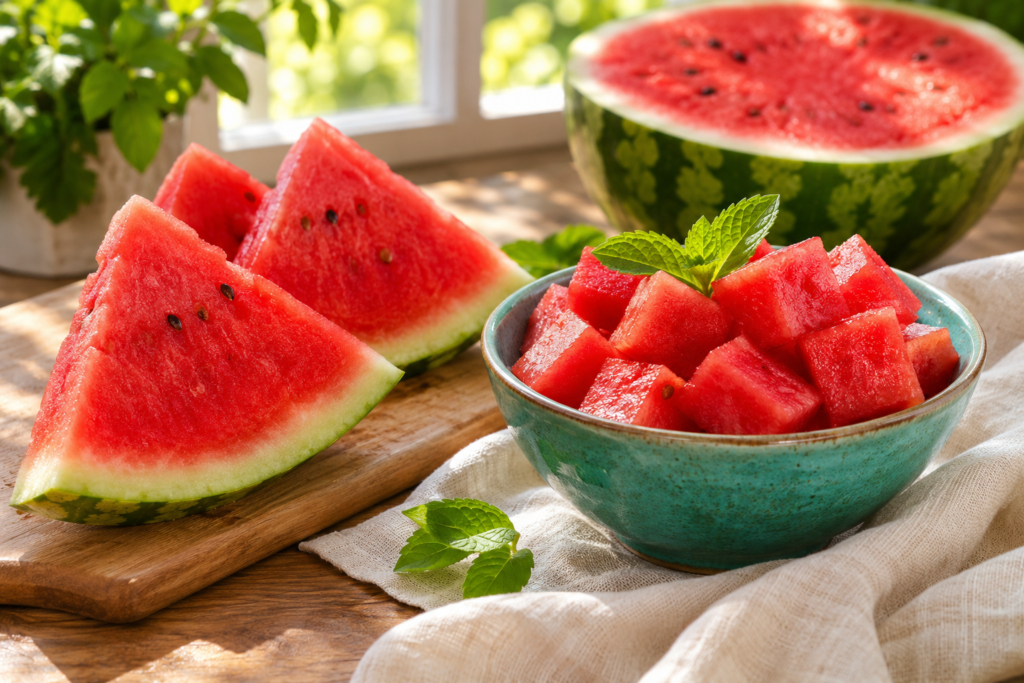
Watermelon also contains a small amount of selenium. A cup of diced watermelon provides about 0.6 mcg, roughly 1% of an adult’s daily requirement. Its contribution to selenium intake is small. Watermelon nutrition information
A word about Brazil nuts

One Brazil nut may contain around 68–91 mcg of selenium, and the actual amount can vary considerably. A single nut can supply more than an adult’s daily requirement. A handful can bring you close to or above the upper limit, especially if you’re also taking a supplement. If you enjoy Brazil nuts, keep portions small, and don’t rely on them to measure out a precise daily dose.
Source — NIH selenium consumer fact sheet
What are the signs of too much selenium?
Taking too much over time can cause the following symptoms.
● Hair loss
● Brittle nails or nail loss
● Garlic-smelling breath or a metallic taste
● Nausea and diarrhea
● Skin rash and fatigue
● Nerve problems
A very large dose can cause serious poisoning. If someone may have taken a large amount, call U.S. Poison Control right away at 1-800-222-1222. Call 911 if they collapse, have a seizure, have trouble breathing or can’t be woken up.
Sources — NIH toxicity overview and Poison Control
Why the brand you choose matters
In 2008, a liquid dietary supplement sold in the U.S. turned out to contain about 200 times the selenium listed on its label. More than 200 people in several states got sick, with symptoms like hair loss, nail changes and diarrhea. Supplements aren’t approved by the FDA before they’re sold, so choose products from reputable makers. Better still, look for independent product certification such as USP Verified or NSF certification. These programs check product quality, including label accuracy and contaminants. A certified product still needs to be appropriate for your health and dose, and certification doesn’t establish that it treats a condition.
Sources — Published investigation of the 2008 outbreak, FDA supplement information, and NIH supplement quality guidance
Before you buy a supplement, check what you already take

Start with the Supplement Facts panel on your multivitamin or prenatal vitamin. Check any thyroid, immune or hair-and-nail formula too. A multivitamin with 55 mcg plus a standalone pill with 200 mcg adds up to 255 mcg before you’ve eaten anything.
Ask your clinician before adding a separate selenium product if any of these apply to you.
● You’re pregnant or breastfeeding
● You have a thyroid condition
● You’re on dialysis
● You’re receiving cancer treatment
Source — NIH selenium supplement and medication information
Iodine, vitamin E, and vitamin C work closely with selenium.
- Iodine and selenium support the thyroid together. Iodine helps make thyroid hormones. Selenium-containing enzymes help convert T4 into the more active T3 and protect thyroid cells during hormone production. Low selenium can worsen the effects of iodine deficiency.
- Vitamin E and selenium help protect cells. Vitamin E helps protect cell membranes from oxidative damage, while selenium-containing enzymes help remove damaging peroxides. Their protective functions complement each other.
- Vitamin C participates in the same antioxidant network. Selenium-dependent enzymes help recycle antioxidants, including vitamin C, so the body can keep using them.
These relationships support getting adequate amounts through your diet. Extra supplements are best guided by your intake and health needs, especially with iodine, because excessive amounts can disrupt thyroid function.
A practical approach
For most of us, getting enough selenium can be as simple as eating a variety of familiar foods. If you’re thinking about taking it for a particular symptom or health condition, first ask what benefit you can reasonably expect and how much selenium you’re already getting.
This article is for general education. For advice about your own health or supplements, speak with your healthcare professional.

Ben — known to his clients and readers as Poppa Ben — is a certified practitioner of Natural Bioenergetics (formerly Health Kinesiology) with decades of hands-on experience helping people restore their energy and vitality. He writes about natural health, nutrition, herbs, energy work, and the occasional skin-healthy recipe. His approach always comes with the same reminder: your body wants to be in balance, and sometimes it just needs someone to listen.