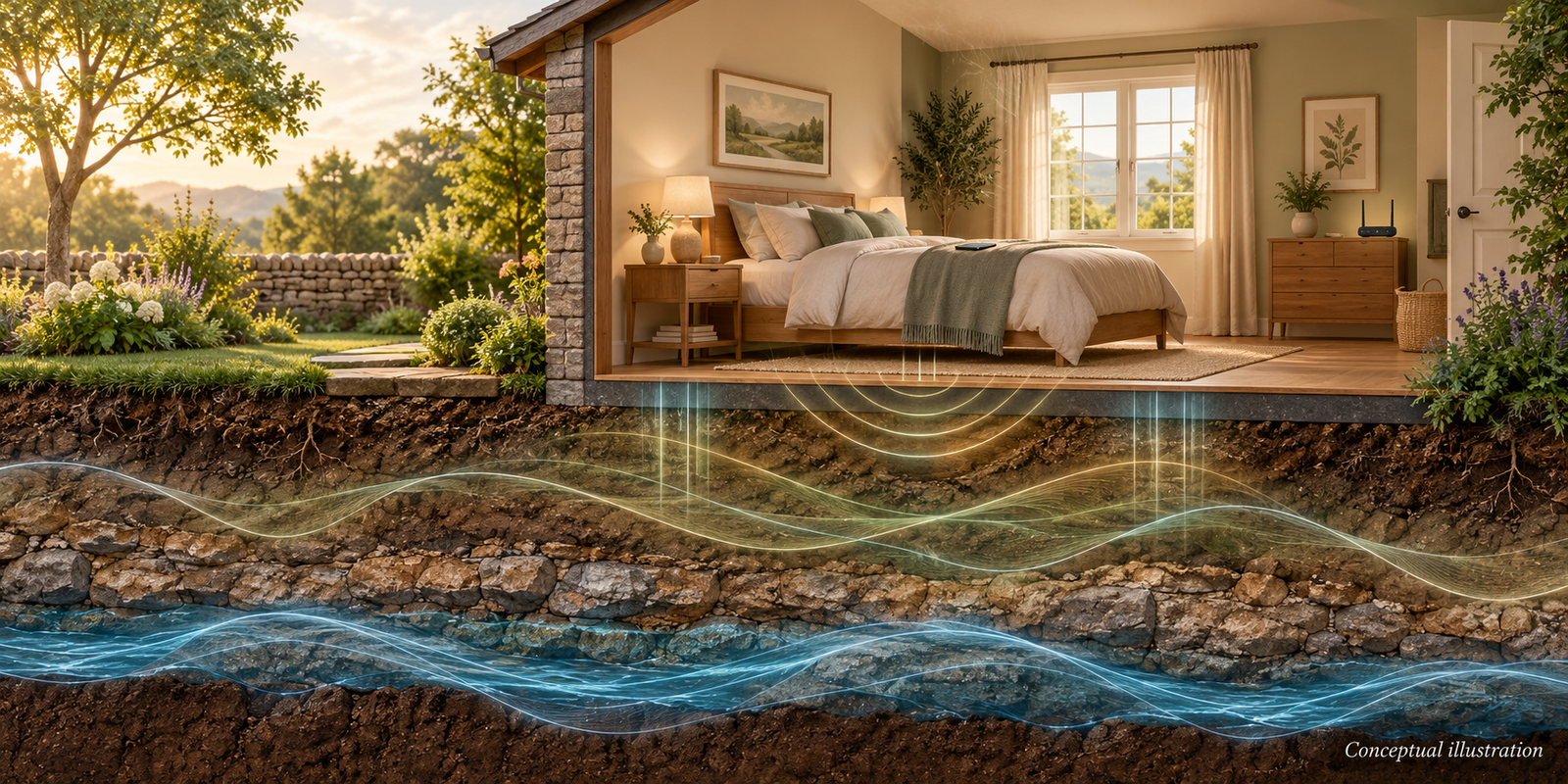
By Poppa Ben | PoppaBen.com
Have you ever heard of geopathic stress? Most people haven’t, and that’s okay. It’s a familiar idea in some natural-health practices, but many folks only come across the term when they start wondering about their home environment.
When we think about staying healthy, we usually think about food, exercise, sleep, and maybe a few supplements. Since I started practicing Health Kinesiology, now called Natural Bioenergetics, in 2009, I’ve also paid attention to something people tend to overlook: the places where we spend our time. Especially the spot where we sleep every night.
So pull up a chair. I want to walk you through how geopathic stress is understood in my HK/NB training, talk a bit about electromagnetic fields, and share a fertility story from my practice that I still think about. Along the way, I’ll be straight with you about what’s practitioner thinking, what’s personal experience, and what the science actually says.
What Is Geopathic Stress?
In the HK/NB training I received, geopathic stress—GS for short—is a big umbrella. It covers earth-related influences, and it also includes electromagnetic stress from man-made sources.
Just so we’re clear: not everyone uses the term this way, and including EMFs under GS doesn’t mean every electromagnetic field is harmful. It’s simply how my training groups things.
Practitioners look at two things together: the place and the person. Where does someone spend their time, and how sensitive do they seem to be to particular influences?
Hartmann and Curry Lines
Two names you’ll hear often in GS circles are Hartmann and Curry.
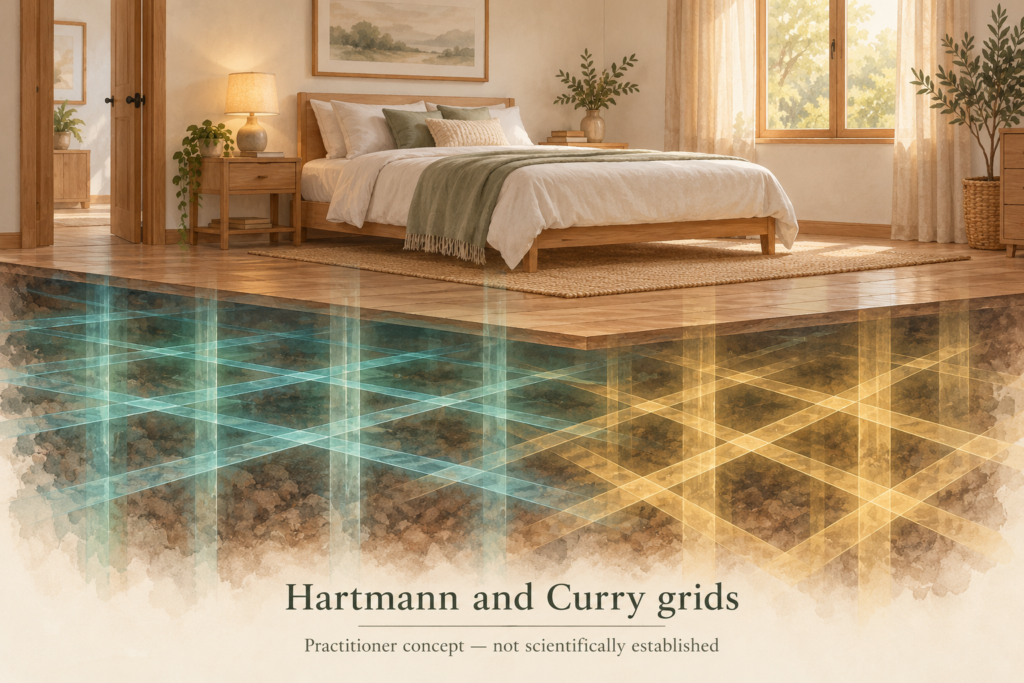
Hartmann lines are described as a grid running roughly north–south and east–west. Curry lines are described as a diagonal grid, running roughly northeast–southwest and northwest–southeast.
Practitioners pay special attention to where lines cross, sometimes called nodes, and to spots where these grids overlap with other proposed disturbances.
I want to be honest here: these descriptions come from practitioner tradition. The grids and their proposed harmful effects haven’t been scientifically established.
Other Earth-Related Influences
GS writers also talk about underground water, geological faults, mineral deposits, ley lines, and smaller patterns described as spots, spirals, or energy clouds. Different schools sort these in different ways.
Underground water and fault lines are, of course, real physical things. Whether they cause the specific subtle-energy effects described in GS practice is a separate question, and that question still needs evidence.
Jane Thurnell-Read’s Work
If you’d like to explore the subject further, Jane Thurnell-Read’s books include Geopathic Stress: How Earth Energies Affect Our Lives and Geopathic Stress & Subtle Energy. Her work discusses proposed energy types, individual sensitivity, detection methods, and ways practitioners try to correct GS. See the knowledge of Jane at her website here.
The available excerpts acknowledge that some practitioners include man-made electromagnetic pollution within GS, while also cautioning that this broader terminology can cause confusion. She discusses electromagnetic pollution separately too.
In this post, I’m using the broader definition from my HK/NB training. The excerpts provide useful context, but they don’t settle every aspect of how she uses the term.
Practitioners may use dowsing or muscle testing to look into GS. I use muscle testing in my own work, but I want you to know these methods haven’t been validated as medical tests for diagnosing infertility or determining the cause of an illness.
A Quick, Friendly Primer on EMFs
Electromagnetic fields—EMFs—are all around us. Some are natural, and some come from our electrical and wireless gadgets.
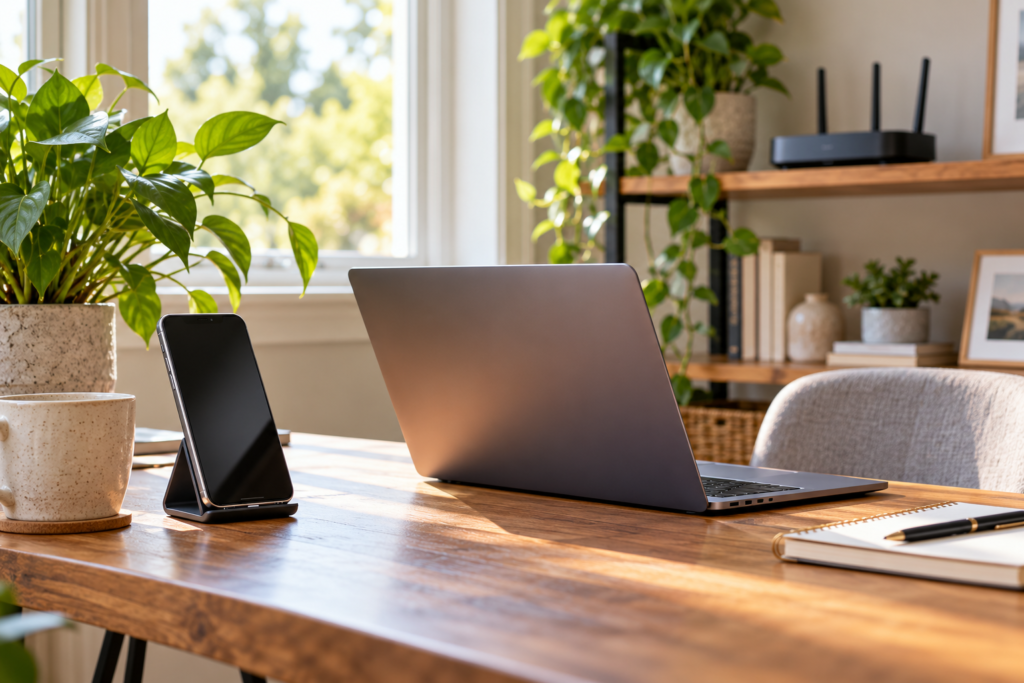
Your household wiring and appliances give off low-frequency fields. Your phone, Wi-Fi router, and other wireless devices use radiofrequency fields.
These everyday fields are non-ionizing, which puts them in a different category from ionizing radiation like X-rays. That’s a helpful distinction, but “non-ionizing” doesn’t automatically mean “safe in every situation.” Frequency, strength, and how long you’re exposed all matter too.
If you own an EMF meter, it can measure the specific fields it’s built to detect. But a reading on its own doesn’t tell you something is dangerous, and it can’t diagnose GS.
So, Are EMFs Dangerous?
At high enough levels, yes, they can be. Strong radiofrequency exposure can heat body tissue, and strong low-frequency fields can stimulate nerves and muscles. That’s exactly why exposure limits exist. Normal household exposure is a very different situation, though.
One everyday concern is worth knowing about if you or a loved one has an implanted medical device. Magnets in some phones and smartwatches can interfere with things like pacemakers. The FDA recommends keeping these gadgets at least six inches away from implanted devices. Keep in mind this is about magnetic interference, a separate issue from questions about Wi-Fi and fertility.
What about cancer? This has been studied a lot. In 2011, IARC classified radiofrequency fields as “possibly carcinogenic to humans.” That label reflected limited evidence, not proof that phones cause cancer.
A review commissioned by the WHO and published in 2024 found no increase in brain-cancer risk linked to mobile-phone use in the human studies it looked at. That’s reassuring context, and research on other exposures and health outcomes is still ongoing.
A Word About Bodywell
You may have come across Bodywell. Its blog posts encourage people to think about how close they keep phones, laptops, wireless earbuds, and other gadgets. Its fertility article raises concerns about oxidative stress and possible effects on reproduction. Those are fair questions for researchers, but simply being exposed to something doesn’t mean you’re getting a harmful dose. See the Bodywell blog here.
Bodywell sells products called the BioChip and BioCard. It reports lab results showing SAR reductions of up to about 80%, plus thermal, EEG, and water-pH testing.
SAR measures how quickly body tissue absorbs energy from radiofrequency signals. And here’s the thing: an 80% drop in one lab measurement isn’t the same as an 80% drop in health risk.
My honest take is that the testing described on its website doesn’t establish that these products prevent cancer, boost fertility, or protect a pregnancy. That would take clinical studies that actually measure those outcomes. Bodywell itself says its products aren’t meant to diagnose, treat, cure, or prevent any disease.
A Fertility Story From My Practice
Now for the story I promised.
A man around forty came to see me. He and his wife had been trying to have a baby without success. Using my Health Kinesiology testing, I found what I understood to be a geopathic-stress issue affecting them.
His wife wasn’t comfortable with unconventional approaches, so the work went ahead without her knowing about it.
I got some vials from HK International. According to my testing, they were to be placed behind the washing machine and dryer. That location also kept the vials out of sight.
I told him that, if this worked, I expected it would take about two months for the body to recover sufficiently for conception. That was my assessment at the time, not a medically established timeline.
I also asked that they seek a blessing from a holy man, which they did.
About two months later, they went to a wedding and got home very late. Their hot-water system had also broken down, leaving them without hot water.
They later told me she conceived that very night. She carried the baby to term.
You can understand why this one stuck with me. It happened right around the time I’d said a change might be possible.
Still, I share it as a personal story. It can’t prove that GS was behind their trouble conceiving, that the vials fixed it, or which factors made a difference. And the exact night of conception is what they told me, not something I could verify.
One more thing: if you’re considering a health-related change, talk it over openly with your spouse and make the decision together. Please don’t take this story as advice to keep an intervention hidden.
What the Fertility Research Actually Says
Let’s look at the bigger picture. Geopathic stress hasn’t been established as a cause of infertility, and reliable clinical research hasn’t shown that GS corrections improve the chances of pregnancy or a live birth.
What about phones and Wi-Fi? A 2024 systematic review of nine human observational studies found the evidence on radiofrequency exposure and sperm outcomes very uncertain. Another 2024 review found the evidence on female reproductive outcomes very uncertain too.
These reviews don’t establish that everyday phone or Wi-Fi use causes infertility or miscarriage. At the same time, “uncertain” means we shouldn’t claim every possible effect has been ruled out either.
A meaningful personal experience can raise good questions. It just can’t tell us what will help another couple.
Simple Steps You Can Take at Home
You don’t need expensive equipment to get started. Try a few easy changes:
- Make your bedroom a restful place. Think about light, noise, temperature, bedding, and those late-night phone alerts.
- Give your head a little space. If you’d like less direct exposure from your phone, try speakerphone or a wired headset.
- Keep a simple journal. Jot down what you change and how you feel, without deciding ahead of time what the explanation will be.
- Ask good questions before you buy. Does the product’s evidence show a lab reading, or a real health benefit?
Keeping your handset farther away can reduce your exposure from it, but it isn’t a proven fertility treatment.
Keep Your Doctor in the Loop
Please don’t let home changes delay a proper fertility checkup.
For married couples who are regularly trying to conceive, evaluation is generally recommended after twelve months if the wife is under 35, or after six months if she’s 35 or older. Known fertility concerns warrant earlier advice. Both husband and wife may need to be checked.
I believe our surroundings deserve our attention. I also believe you deserve a clear picture of what’s practitioner thinking, what’s personal experience, and what’s backed by science, so you can make informed choices.
I have written about some harmful energies here. To learn more about the benefits of of spending time in nature to get good energies, look at my post on that here.
This article is for general information only. It doesn’t diagnose or treat infertility or any other medical condition.

Ben — known to his clients and readers as Poppa Ben — is a certified practitioner of Natural Bioenergetics (formerly Health Kinesiology) with decades of hands-on experience helping people restore their energy and vitality. He writes about natural health, nutrition, herbs, energy work, and the occasional skin-healthy recipe. His approach always comes with the same reminder: your body wants to be in balance, and sometimes it just needs someone to listen.