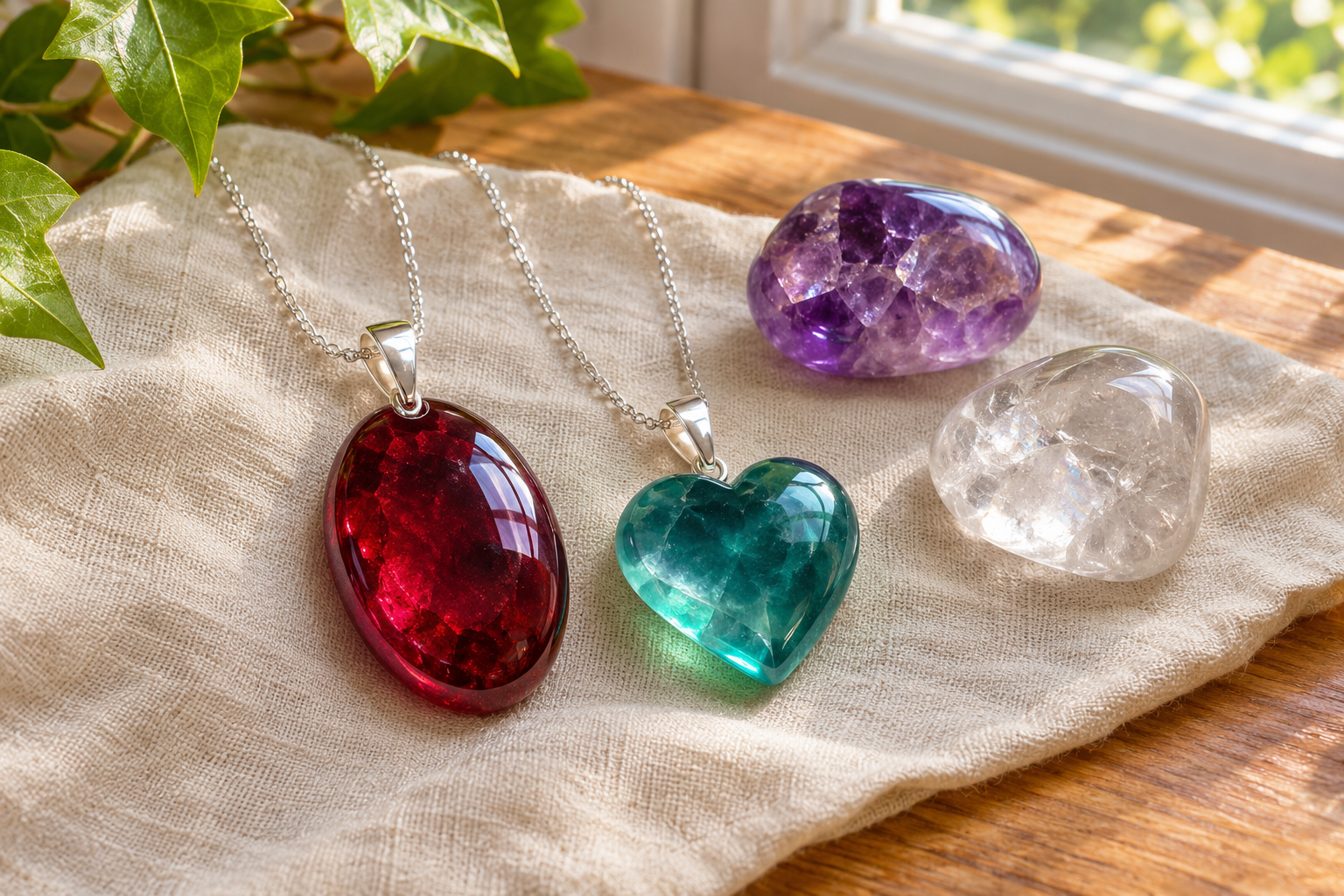
By Poppa Ben | PoppaBen.com
Have you ever had a day when you just didn’t feel like yourself? You might say, “I don’t feel balanced,” without being able to explain exactly what you mean. What you want is simple: to feel settled, comfortable, and normal again.
In my practice, one of the tools I sometimes use is gemstones, specifically stones I prepare through my own proprietary process. I call this approach gem therapy. Here I’ll share what I’ve observed, how long people have been interested in stones, and what modern research does and doesn’t show.
What Is Gem Therapy?
Gem therapy, also called gemstone or crystal therapy, means using stones as part of a personal wellness practice. Some people hold a stone during a quiet moment. Others wear one as a pendant or keep one close by.
Practitioners often describe stones in terms of energy or balance. That language belongs to the framework of the practice. It isn’t an established medical explanation of how the body works.
An Old Idea: Stones in the History of Medicine
The belief that stones can affect the body is not a modern invention. For about two thousand years, physicians and scholars have written about it.
In the first century, the Greek physician Dioscorides listed stones and minerals among the remedies in De Materia Medica, a work that remained influential for centuries in both Europe and the Arab world. [2] In the Middle Ages, Hildegard of Bingen, a German abbess known for her medical writings, recommended specific stones for specific ailments in the fourth book of Physica. [3]
The interest continued among Renaissance doctors. In 1609, Anselmus de Boodt, physician to Holy Roman Emperor Rudolf II, published a major work on gemstones and minerals that included the medicinal properties attributed to them. [4] Just three years later, Avraham Portaleone, a Jewish physician from Mantua, published Shiltei HaGibborim. He wrote at length about the twelve stones of the choshen, the High Priest’s breastplate, and the properties attributed to them. [5]
These writings reflect the understanding of their times rather than modern clinical science. Still, they show that across centuries, physicians and scholars took an interest in stones and health. Their historical use does not establish the effectiveness of today’s programmed stones.
My Experience With Programmed Stones
In my practice, I prepare what I call “programmed stones” for individual clients. I have helped people by making these stones for them through my proprietary process. Some came to me saying they just didn’t feel balanced. After using the stones I made for them, a number of them told me they felt back in equilibrium: more settled, more like themselves, normal again.
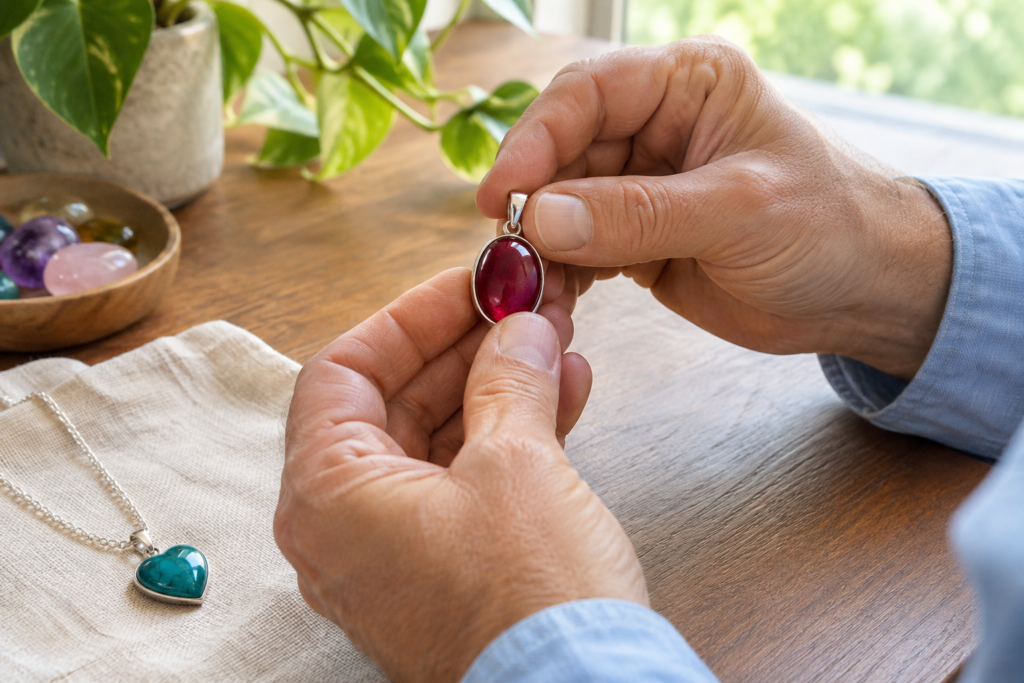
That relief matters to the person who feels it. Sometimes the change someone is looking for is simply feeling at ease in everyday life.
I share this as my experience and my clients’ own reports. Those reports can’t prove that the stone caused the change, and I can’t promise everyone the same result. “Programmed” is my word for how I prepare the stones. “Proprietary” means the method is my own, not that it has been independently tested.
What Benefits Might You Notice?
The benefit I’m describing is a personal sense of well-being. For someone who connects with this approach, that might mean feeling more settled, more comfortable in themselves, or more anchored in a daily self-care routine.
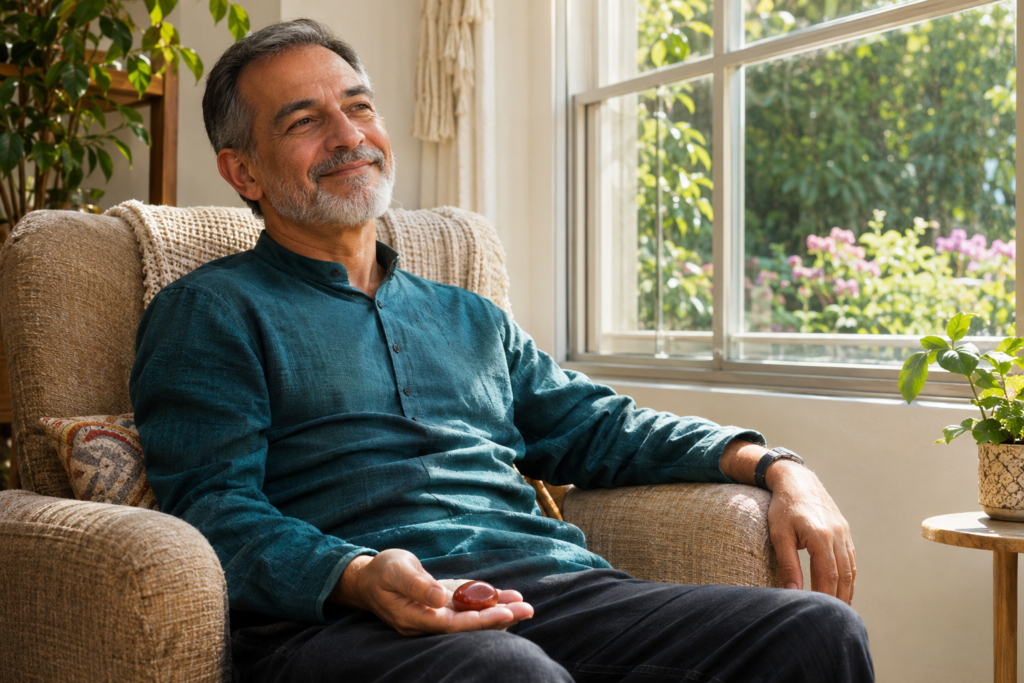
A stone can also be a tangible reminder to pause. Touching it or noticing a pendant can prompt you to take a breath, slow down, and check in with yourself. That can be a practical part of a self-care routine.
What Does Modern Research Say?
Science has not established that stones have special healing effects. A 2025 randomized study of 138 adults compared rose quartz with a look-alike placebo stone over 14 days. It found no specific benefit of the crystal for anxiety, though participants who believed in crystals improved with either stone. [1]
The findings suggest that expectations and the context of using a stone can influence how we feel. A person’s relief can be real while the reason for it remains uncertain. That study didn’t evaluate my proprietary process. Its effectiveness remains unverified.
Keep the Bigger Picture in Mind
“Out of balance” can mean different things. If you feel emotionally unsettled, look at your sleep, stress, meals, and support system, and talk to a qualified professional if it persists. If you mean physical dizziness, unsteadiness, or trouble walking, seek medical evaluation. Sudden dizziness, loss of balance, or difficulty walking can be signs of a stroke and require emergency help. [6]
If you use a stone, treat it as an addition to your care, never a replacement. Continue prescribed treatment. Use stones externally only: don’t swallow them, grind them into powder, or soak them in drinking water.
A Personal Approach
What interests me most is the person in front of me: how they feel, what they’re struggling with, and whether they notice a meaningful improvement. Programmed stones are one part of that work. People have valued stones for centuries, and some of my clients report feeling more settled after using the stones I prepare for them. I value those experiences while being honest about what we do and don’t know.
Disclaimer: This article shares personal practice observations, historical sources, and general information. Gem therapy and programmed stones are not established treatments for medical or mental-health conditions. Nothing here replaces professional diagnosis, treatment, or individualized healthcare advice.
Sources
[1] Escolà-Gascón Á, et al. “Placebo effects in alternative medical treatments for anxiety: false hope or healing potential?” CNS Spectrums. 2025;30:e70. Read the study.
[2] Dioscorides. De Materia Medica, Book 5. First century AD. Library of Congress historical overview and Morgan Library manuscript catalog.
[3] Hildegard of Bingen. Physica, Book 4. Twelfth century. Selected writings, including translated excerpts from the Book of Gemstones.
[4] Anselmus de Boodt. Gemmarum et Lapidum Historia. 1609. Wellcome Collection digitized edition. See also historical account of de Boodt’s medical and mineralogical work.
[5] Avraham Portaleone. Shiltei HaGibborim. Mantua, 1612. Historical discussion in Alessandro Guetta, Italian Jewry in the Early Modern Era, pp. 55–57. Read the historical discussion.
[6] Centers for Disease Control and Prevention. Signs and symptoms of stroke.

Ben — known to his clients and readers as Poppa Ben — is a certified practitioner of Natural Bioenergetics (formerly Health Kinesiology) with decades of hands-on experience helping people restore their energy and vitality. He writes about natural health, nutrition, herbs, energy work, and the occasional skin-healthy recipe. His approach always comes with the same reminder: your body wants to be in balance, and sometimes it just needs someone to listen.