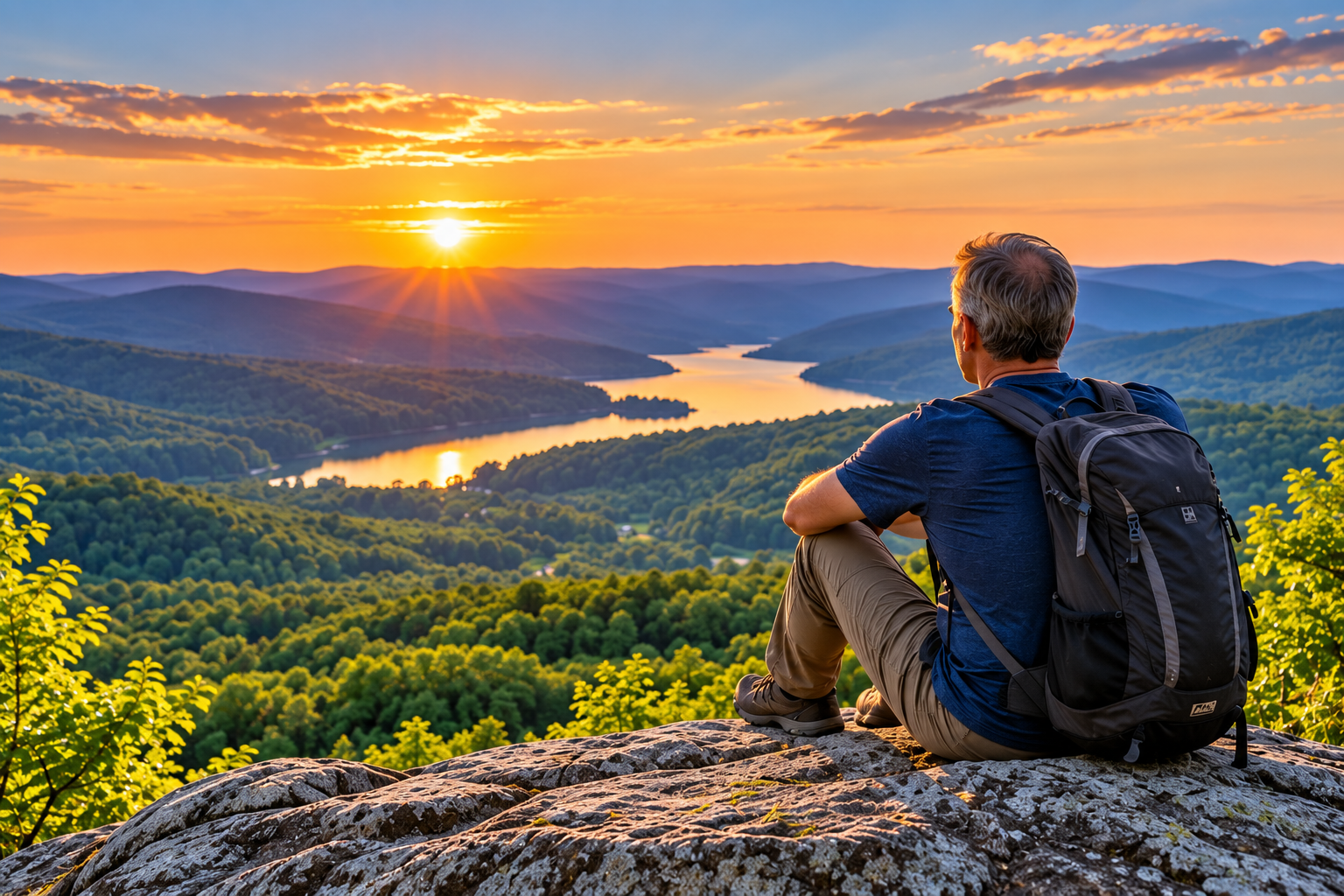
When was the last time you spent some time outside with no particular goal?
Not rushing to the car. Not checking your phone. Not trying to accomplish something.
Just being outside.
Maybe you sat under a tree, walked through a park, worked in a garden, or watched the sunset. In our increasingly indoor and digital world, this simple habit is easy to overlook.
But research suggests that spending time in natural surroundings may be associated with benefits for our mental well-being and some aspects of physical health.
And beyond the research, there’s something many of us already recognize from experience:
Being outside in nature can simply feel good.
We Spend a Lot of Time Indoors
Many of us spend a large part of the day inside homes, offices, stores, and cars—often looking at one screen or another.
Human beings lived very differently for most of history. Daily life naturally involved much more exposure to daylight, changing weather, plants, animals, and the outdoor environment.
I’m certainly not suggesting that we need to give up modern life. But perhaps there is something worth reclaiming from that connection with the outdoors.
Nature Gives Your Mind a Break
Our attention is constantly being pulled in different directions by notifications, emails, news, work, and everything else competing for our attention.
Step outside into a natural setting and the experience changes.
Instead of processing information from a screen, you can simply notice what’s around you: the sky, the trees, birdsong, the breeze, or the way sunlight moves through the leaves.
For many people, that’s an invitation to slow down.
Have you ever noticed how you can feel mentally tired after hours in front of a computer? Sometimes what we need isn’t another cup of coffee or another few minutes looking at our phones.
Sometimes we simply need a change of scenery.
After nearly 30 years of exploring natural approaches to health, I’ve come to appreciate that wellness isn’t always about adding something. Sometimes it’s also about giving ourselves a break from the constant stimulation of everyday life. Spending some quiet time outdoors is one of the simplest ways I know to do that.
What Does the Research Say About the Health Benefits of Nature?
There is some interesting research behind the idea of spending more time in nature.
A large 2019 study published in Scientific Reports looked at nearly 20,000 adults in England. The researchers found that people who reported spending at least 120 minutes in nature during the previous week were more likely to report good health and high well-being than people who reported no nature contact.
Interestingly, the association was seen whether those 120 minutes came from one long visit or several shorter ones.
Researchers have also studied the Japanese practice known as shinrin-yoku, often translated as “forest bathing.” This doesn’t involve actually bathing. It simply refers to spending time immersed in a forest environment.
However, this was an observational study. It found an association; it did not prove that spending exactly 120 minutes in nature causes better health.
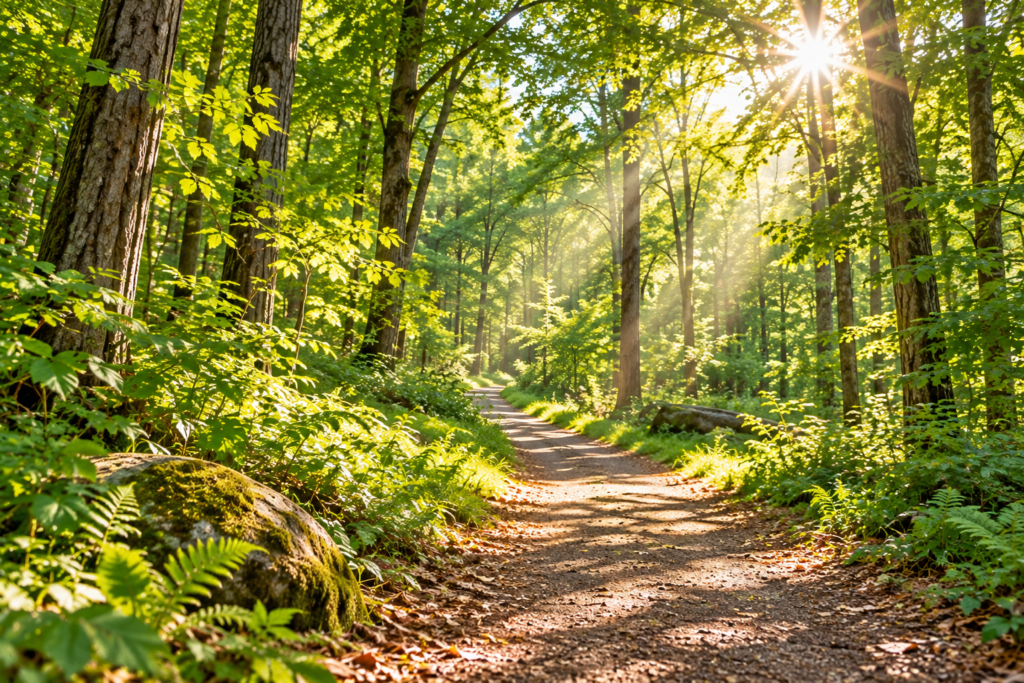
A systematic review and meta-analysis of forest bathing and cortisol found that most of the included studies reported lower cortisol levels following forest exposure compared with control conditions or measurements taken beforehand.
That’s interesting, but it shouldn’t be turned into claims that forests “cure stress” or treat disease. The researchers themselves noted that more research is needed.
You Don’t Need a Forest
When people hear about spending time in nature, they may picture hiking deep into a forest or traveling to a beautiful national park.
That’s wonderful if you can do it, but nature can be much closer to home.
A local park, your backyard, a garden, a walking trail, a tree-lined street, a lake, or a pond can all provide opportunities to get outdoors.
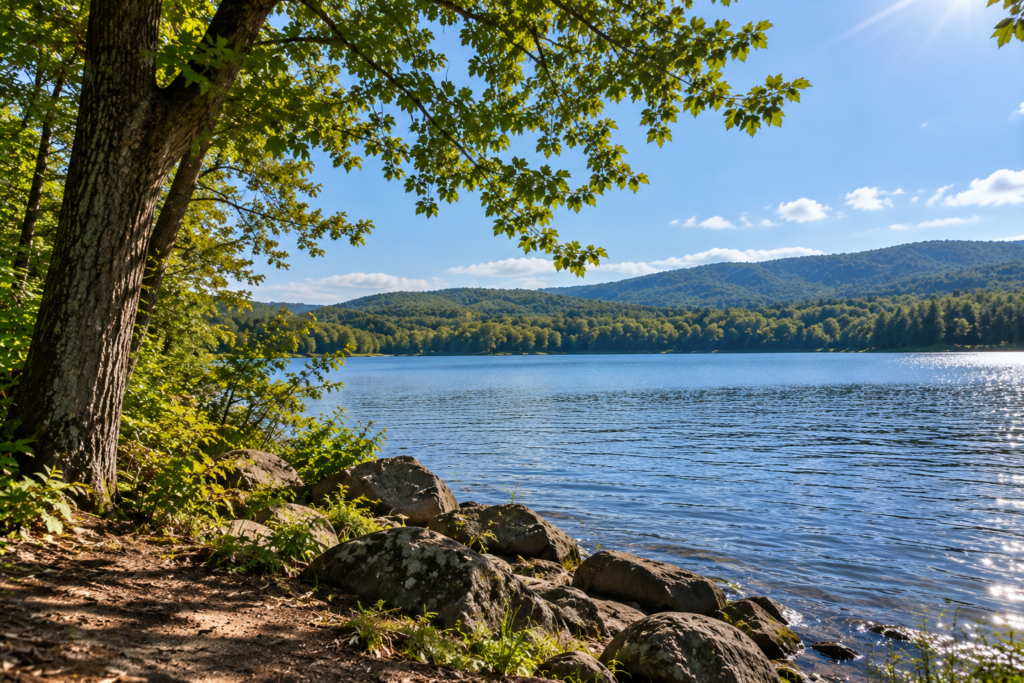
The important thing is simply to start noticing the nature that is already around you.
Start by noticing the nature that’s already around you.
Take a Walk Outside
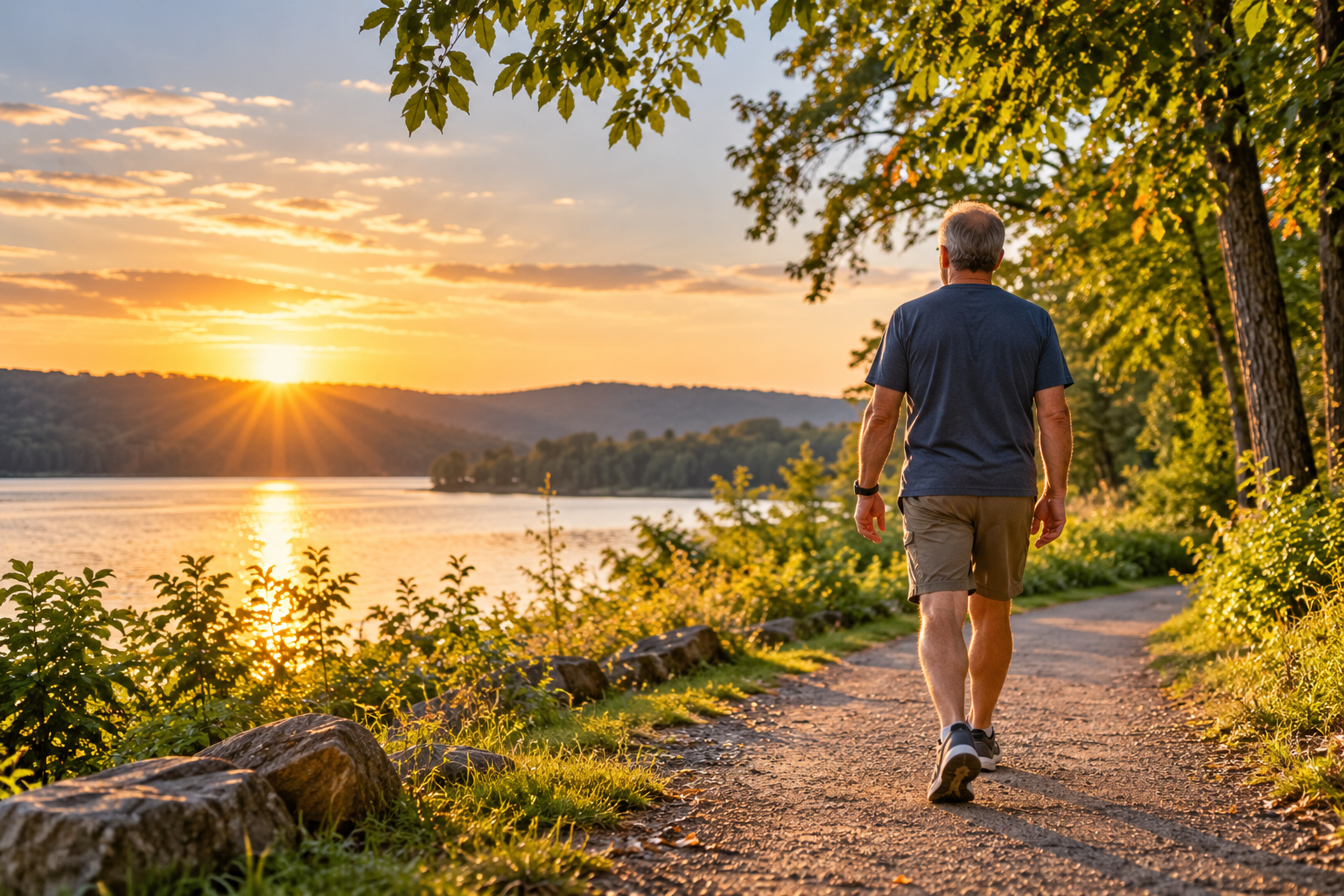
One of the easiest ways to combine time in nature with physical activity is simply to take a walk through a park or another green area.
It doesn’t need to be strenuous. Sometimes a peaceful stroll is exactly what you’re looking for.
If you’d like to learn more about the physical benefits of walking, see my article The Health Benefits of Walking: Why This Simple Activity Matters.
Put the Phone Away for a While
Your phone can certainly be useful outdoors for safety, directions, taking photographs, or emergencies.
But you don’t have to spend your entire time outside looking at it.
Put it in your pocket for a while. Look around. Listen. Notice the things you normally walk past without seeing.
Part of the benefit of getting outdoors may simply come from giving our minds a break from the constant stream of information competing for our attention.
Getting Outside During the Day
Being outdoors during the daytime also gives you exposure to natural daylight.
Light and darkness are major environmental signals influencing our circadian rhythms—the approximately 24-hour cycles involved in functions such as sleep patterns, hormone release, appetite, and body temperature. The National Institute of General Medical Sciences explains how light influences our circadian rhythms and biological clock.
That doesn’t mean staring at the sun. Never stare directly at the sun. Simply spending time outdoors during the day gives your body’s biological clock natural light cues.
Remember that extended sun exposure can damage the skin, so use appropriate sun protection when necessary.
What About Going Barefoot?
If the setting is safe and it’s comfortable for you, you might enjoy taking your shoes off and feeling the grass or earth beneath your feet.
Some people refer to barefoot contact with the earth as “grounding” or “earthing.” There are claims that direct physical contact with the earth has specific physiological health effects.
I think this is an area where it’s particularly important to distinguish personal experience from established science.
From my perspective, there is something enjoyable about occasionally taking off your shoes and actually feeling the grass or earth under your feet. It can make the experience of being outside feel more immediate and connected. Whether grounding itself produces specific medical effects is a separate question.
Scientific research specifically on grounding remains limited, so I would not present it as a proven treatment for any health condition.
You don’t need to believe any special health claims about grounding to enjoy the simple experience of walking barefoot on safe grass.
Try a Simple Nature Challenge
Here’s something you can experiment with this week:
Spend 20 to 30 minutes outside each day simply experiencing the outdoors.
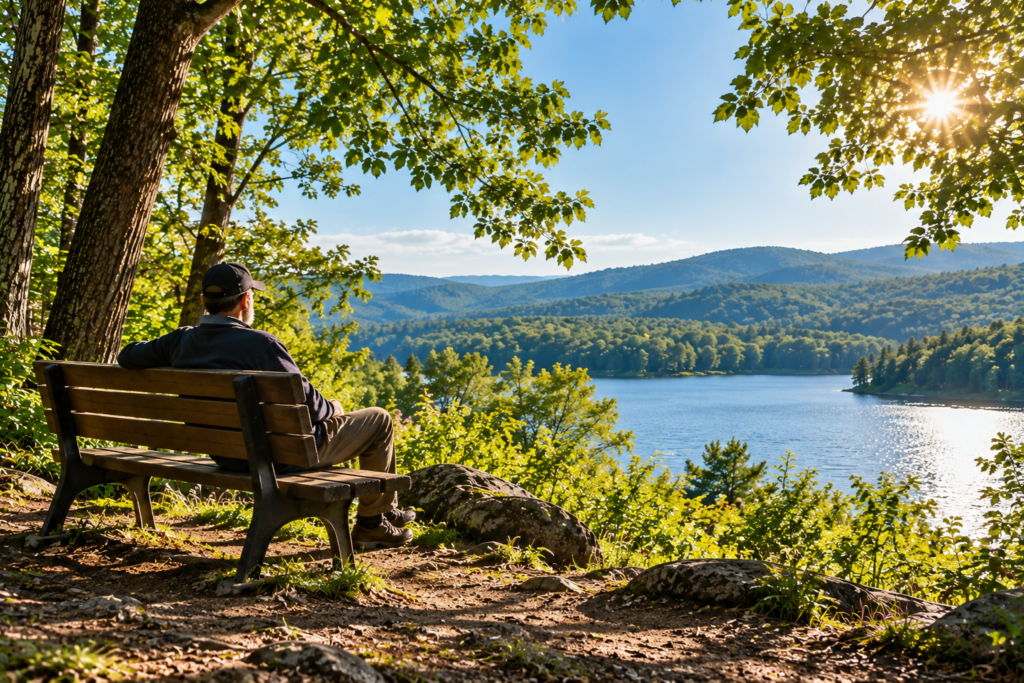
You might walk, sit on a bench, work in your garden, watch birds, or read under a tree.
For at least part of that time, leave the phone in your pocket. Pay attention to what you see and hear.
You don’t have to count steps, measure your heart rate, or turn it into another task you have to complete.
Just be there.
Getting Back to the Basics
Health doesn’t always have to be complicated.
Nourishing food, adequate sleep, moving our bodies, spending time with people we care about, and getting outside are some of the basics of a healthy lifestyle.
Nature isn’t a cure for disease and shouldn’t replace appropriate medical care. But getting outside is a simple and enjoyable habit that may contribute to overall well-being.
So the next time you need a break, instead of automatically reaching for your phone, consider stepping outside.
Take a breath. Look at the sky. Listen to what’s around you.
And spend a little time experiencing the natural world.
Disclaimer: This article is for general educational purposes and is not intended to diagnose, treat, or prevent any medical condition. Research on the health effects of nature exposure is still developing, and individual experiences may vary. Spending time outdoors should complement, not replace, appropriate medical care.

Ben — known to his clients and readers as Poppa Ben — is a certified practitioner of Natural Bioenergetics (formerly Health Kinesiology) with decades of hands-on experience helping people restore their energy and vitality. He writes about natural health, nutrition, herbs, energy work, and the occasional skin-healthy recipe. His approach always comes with the same reminder: your body wants to be in balance, and sometimes it just needs someone to listen.