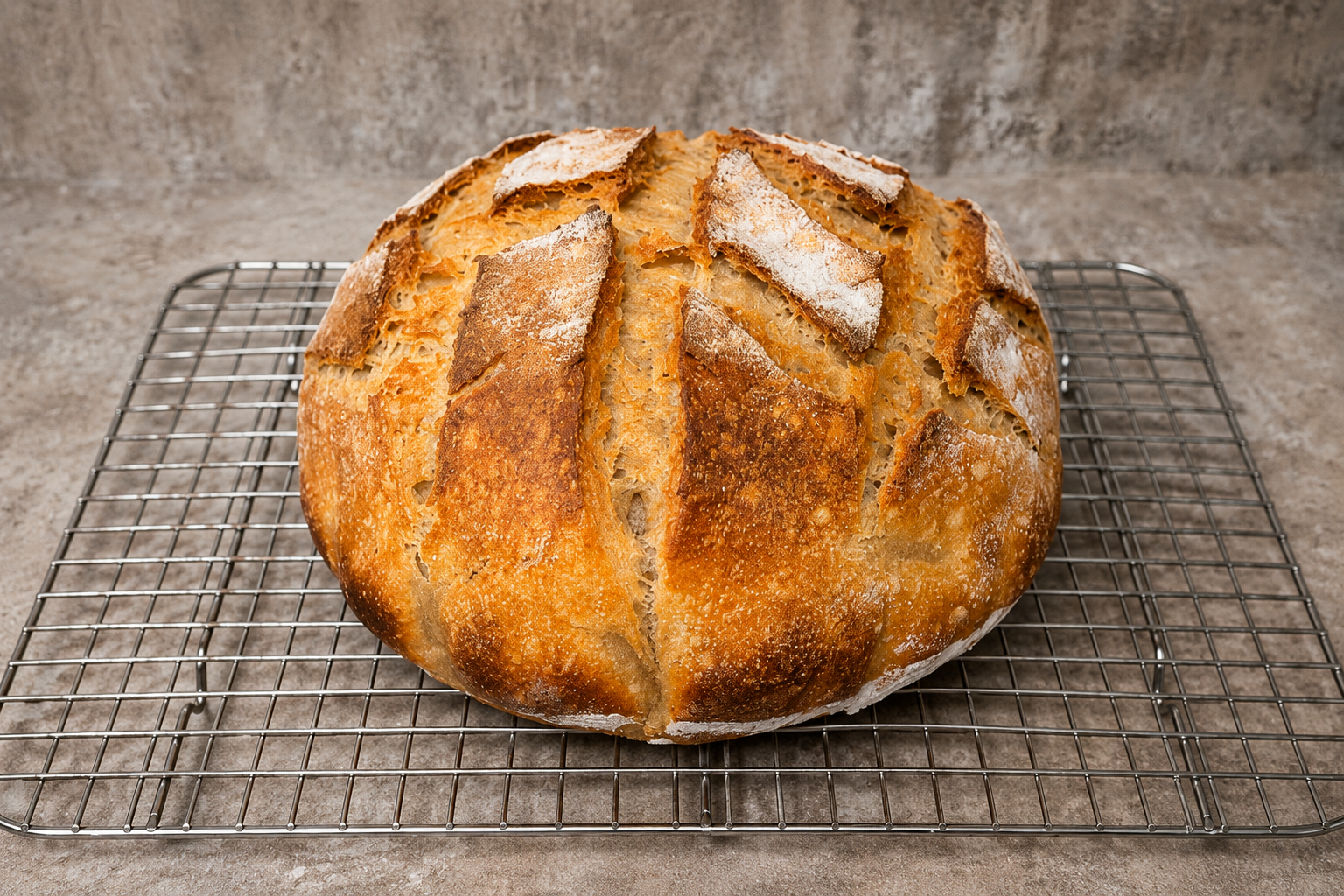
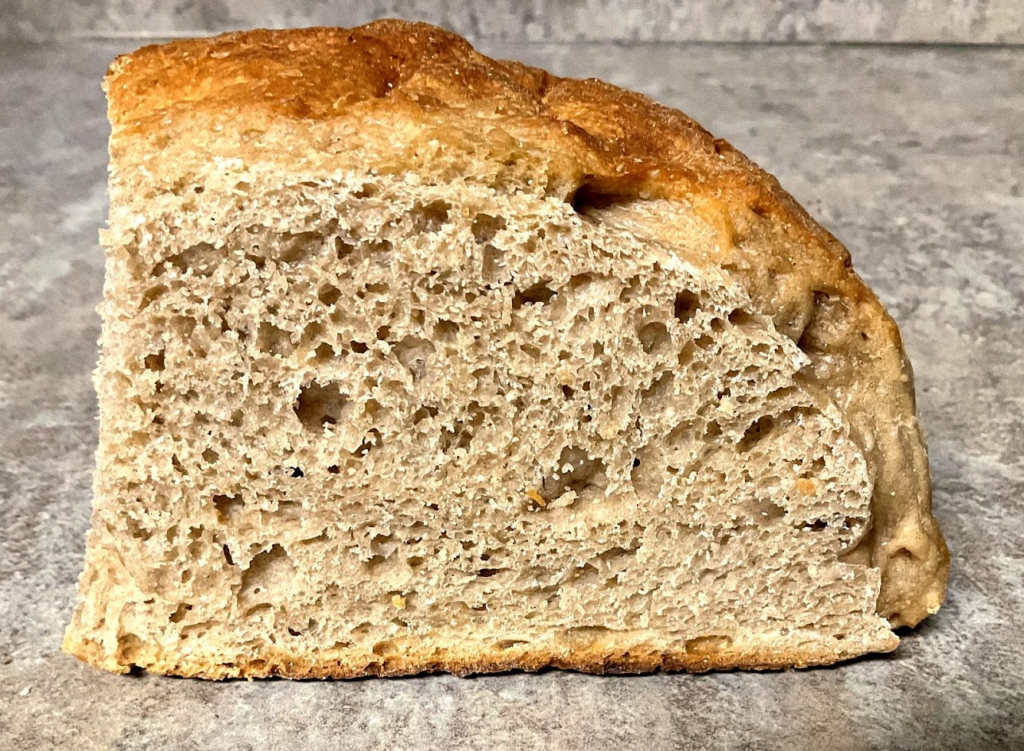
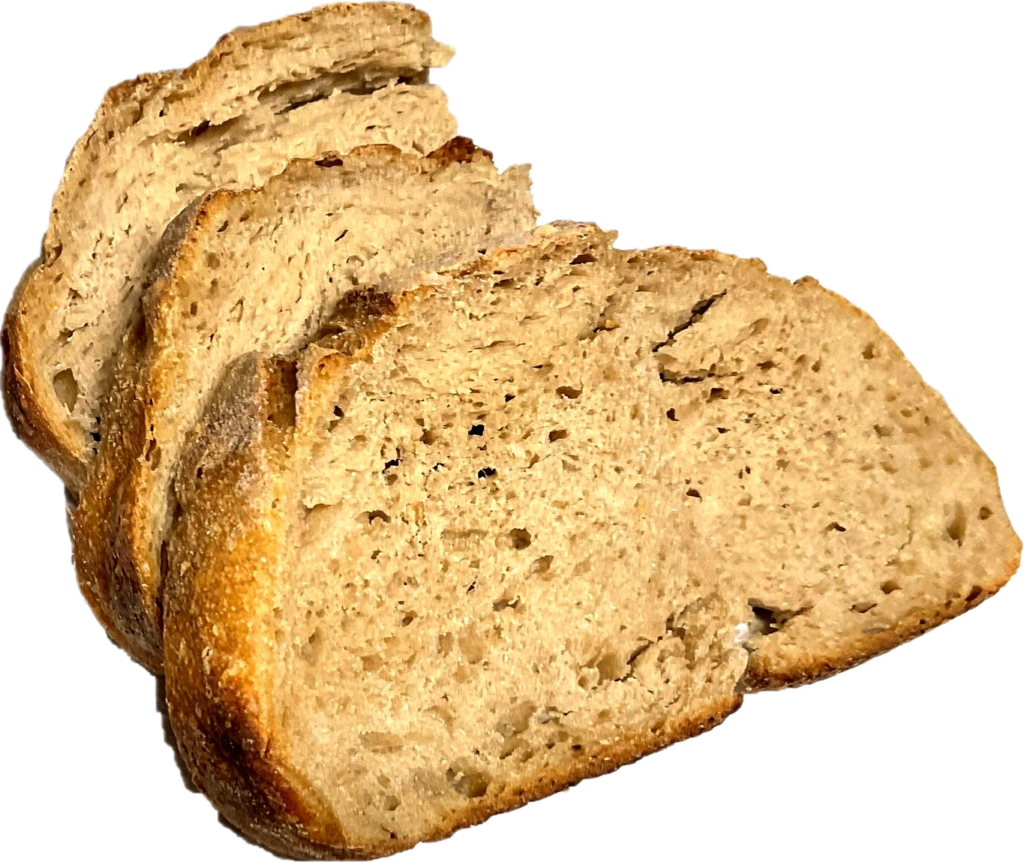
A hearty, flavorful sourdough made mostly with whole spelt flour. Spelt produces a beautifully aromatic bread with a slightly nutty flavor and a tender, satisfying crumb. The secret to this loaf is simple: don’t overwork the dough. Spelt develops differently from conventional wheat, so gentle handling helps preserve its structure and gives you a better loaf.
Recipe
Yield: 1 loaf
Prep & fermentation: About 20 hours, including overnight refrigeration
Bake time: 40–45 minutes
Ingredients
- 40 g active sourdough starter
- 150 g white spelt flour
- 350 g whole spelt flour
- 340 g water
- 8 g salt (many similar recipes call for 10 g salt but we found that 10 g made the batch too sour)
- brown rice flour for dusting
Instructions
1. Mix the Dough
Pour the sourdough starter into a large bowl. Add the white spelt flour, whole spelt flour, and salt. Pour in the water and mix until all the flour is thoroughly incorporated and there are no dry spots.
Cover the bowl and let the dough rest for 1 hour.
2. Stretch and Fold
After the first hour, gently stretch and fold the dough.
Cover and let it rest for another hour, then repeat the stretch-and-fold.
Tip: Spelt dough can weaken when overworked, so handle it gently.
3. Bulk Fermentation
Cover the dough and let it bulk ferment at room temperature for about 6–8 hours, depending on the temperature of your kitchen. Rather than relying only on the clock, look for the dough to rise roughly 40–50%, become slightly domed on top, and show bubbles around the edges.
4. Shape the Loaf
Wet your hands and your work surface with water. Don’t add flour to the work surface. Water will make the dough much easier to handle without drying it out.
Gently turn the dough onto the wet surface. Perform about 6 gentle stretch-and-folds, working around the dough until it begins to form a smooth, round ball.
Lightly dust the dough with rice flour. Cup your hands around the dough and gently pull it toward you, turning it slightly as you go. Repeat around the loaf until the surface is nicely tightened.
Cover the dough and let it rest for 30 minutes.
After the rest, the dough will have relaxed and spread somewhat. Wet your hands again and gently shape it into a smooth, tight round.
5. Final Proof
Line a clean bowl with a thin kitchen towel, or use a banneton (proofing basket). Dust it generously with brown rice flour.
Carefully place the shaped dough into the bowl or banneton seam-side up.
Cover tightly with a plastic bag or shower cap. Let it sit at room temperature for 1 hour, then refrigerate for 10–12 hours.
This overnight rest gives the sourdough time to develop its flavor while making the dough easier to score and bake.
6. Score and Bake
Place a Dutch oven or heavy cast-iron pot, including its lid, in the oven. Preheat to 500°F and, once the oven reaches temperature, let the pot heat for another 45 minutes.
When ready to bake, remove the dough from the refrigerator and place it on parchment paper dusted with rice flour. Carefully invert the loaf so it is now seam-side down.
Lightly dust the top with rice flour and score it with a sharp razor or bread lame.
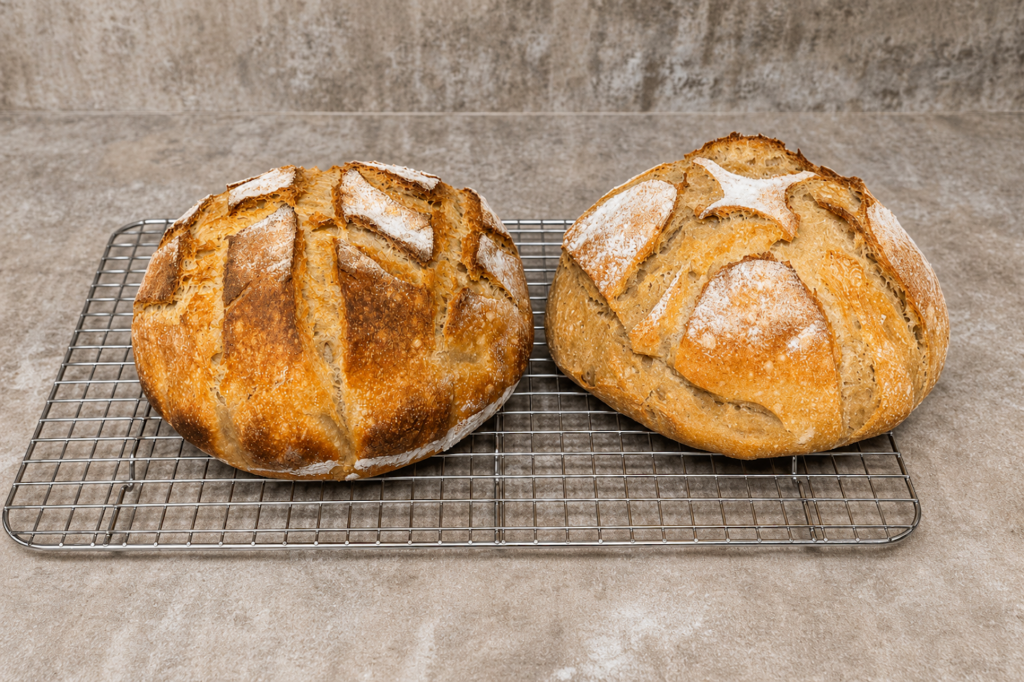
Using oven mitts, carefully remove the extremely hot Dutch oven. Lower the loaf, parchment and all, into the pot and cover immediately.
Bake:
- 20 minutes at 500°F, covered
- Remove the lid and reduce the temperature to 400°F
- Bake another 20-25 minutes uncovered, until the crust is deeply browned and the internal temperature reaches about 205-210°F.
Remove the bread from the pot and place it on a cooling rack.
Let It Cool!
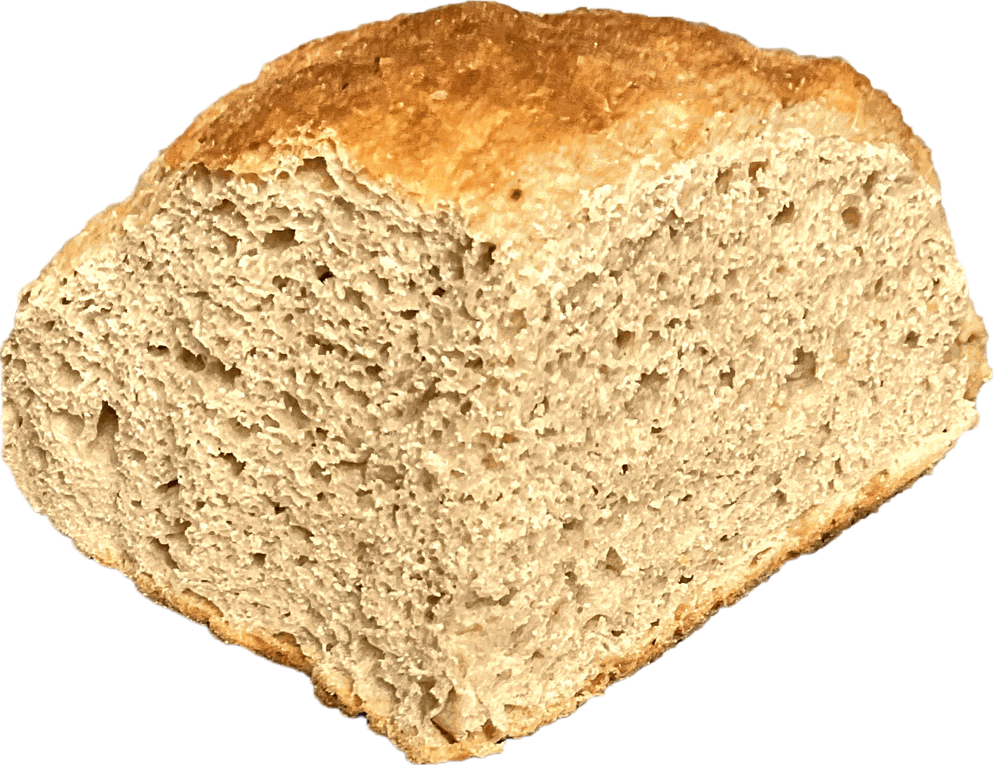
As tempting as it may be, give the loaf time to cool before slicing. This allows the crumb to finish setting and gives you a much better texture.
Then slice, enjoy, and don’t be surprised if that first piece disappears quickly!
Delicious Mostly-Whole-Spelt Sourdough Bread
Want to learn more about sourdough? Read my guide to [Is Sourdough Healthy?] to learn more about sourdough, fermentation, and its potential benefits. For a deeper look at sourdough and fermentation, you can also explore these additional resources:

Ben — known to his clients and readers as Poppa Ben — is a certified practitioner of Natural Bioenergetics (formerly Health Kinesiology) with decades of hands-on experience helping people restore their energy and vitality. He writes about natural health, nutrition, herbs, energy work, and the occasional skin-healthy recipe. His approach always comes with the same reminder: your body wants to be in balance, and sometimes it just needs someone to listen.